
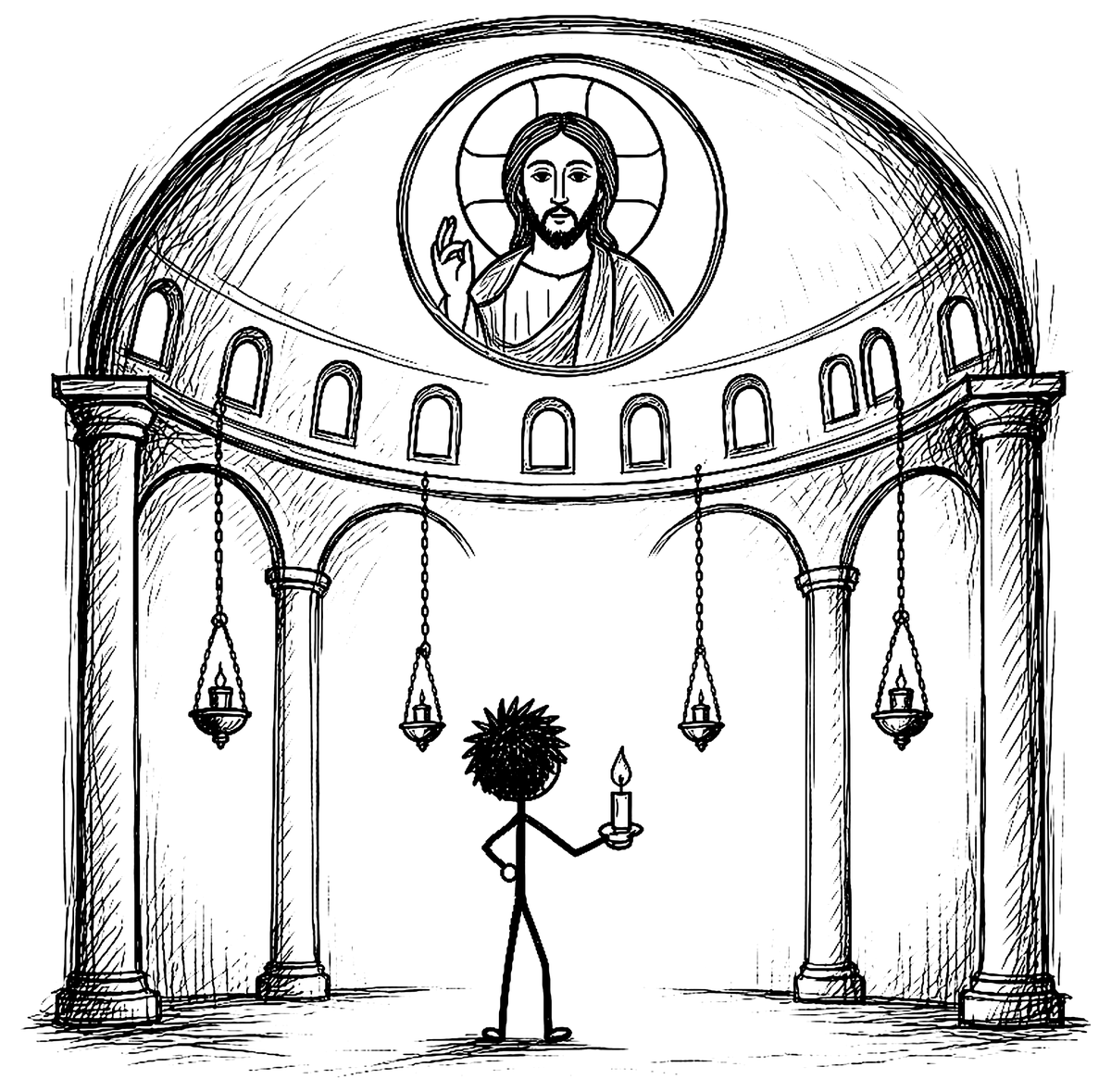
The first time I walked into an Orthodox church, I spent most of the service trying to work out the choreography. Men in gold came out one door carrying things, walked around, and went back in through another. Everyone else seemed to know when to bow. I stood in the back and did my best impression of a coat rack.
Years later I know what all of it is called. What I've never forgotten is how it felt not to.
That's what this guide is for.
What a field guide is
A field guide is the book you take outside. You don't read it cover to cover at a desk. You hear a bird you've heard a thousand times, you flip to the right page, and you finally learn its name, what it's doing, and why it sings at that hour. Then you put the book back in your pocket and keep walking.
This is that guide for the Orthodox Church. You'll see something—a procession, a word, a gesture, a loaf of bread with a stamp on it—and you'll be able to find it here, get oriented fast, and go back to paying attention.
Who it's for
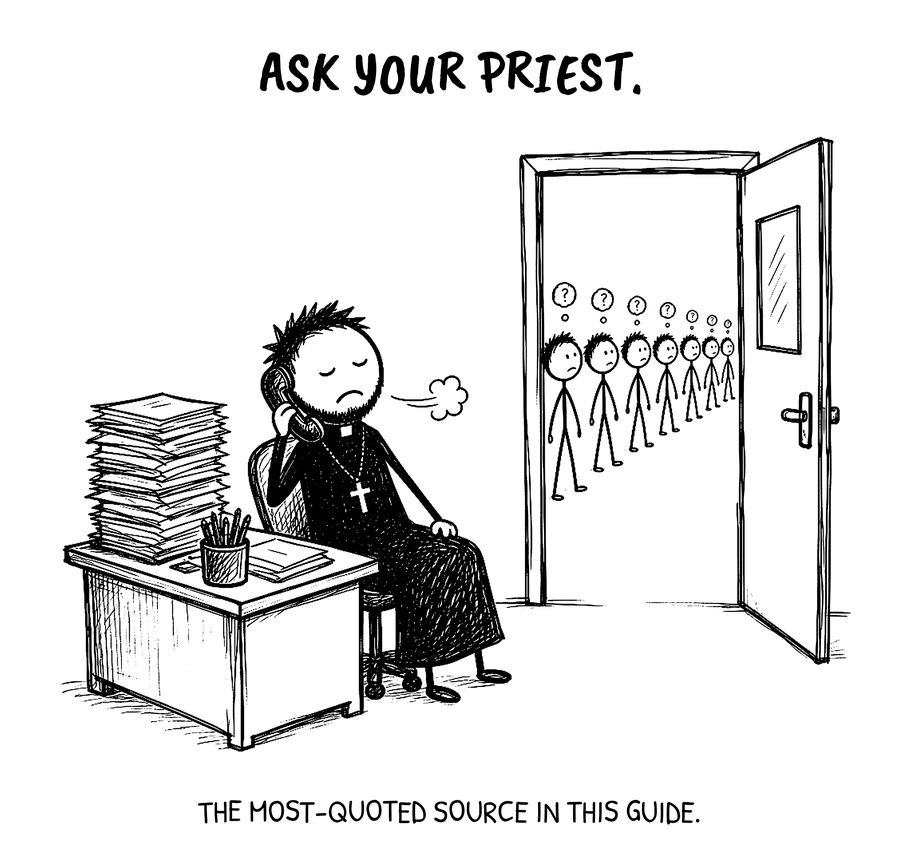
Two kinds of people, and they need the same thing.
The first is the newcomer: the curious Protestant, the Catholic who wandered in, the fiancé of someone Orthodox, the person with no church background at all who followed a friend through the door. You have no idea what's going on. Good. This guide assumes exactly that.
The second is the person who has stood in that nave for thirty years and never quite learned what the deacon is doing with the plate on his head. You've heard the bird your whole life. You'd like to know its name.
I've written every page for the first reader. It turns out that serves the second reader too. When nobody gets to lean on shared shorthand, everybody gets a fresh look.
How the guide is laid out
- Part One, Your First Visit, begins with Who Are the Orthodox? and answers the questions people ask before their first Sunday. It ends with a one-page cheat sheet and a map of the service.
- Part Two, Walking In, is the heart of the guide: the Divine Liturgy, stop by stop, from The Courtyard and the Steps to the coffee urn.
- Part Three, What the Orthodox Believe, starts with the Creed in plain words.
- Part Four, The Mysteries and the Milestones, covers the sacraments, from Baptism and Chrismation to the funeral.
- Part Five, The Week and the Year, begins with Vespers, Vigil, and the Daily Round and follows the calendar to Pascha.
- Part Six, Living It, is about the rest of the week, starting with Prayer at Home.
- Part Seven, History and Neighbors, opens with A Short History, Pentecost to America and sets the Orthodox beside their neighbors.
- Part Eight, Coming Home, is for anyone wondering how people become Orthodox, beginning with The Path In.
At the back you'll find the Glossary, a Calendar of Feasts, Further Reading by Level, a Pronunciation Guide, and the Bibliography.
How each entry works
Most entries answer the same questions in the same order, because that's the order the questions arrive in. There are six steps, and then a pointer onward:
- What you'll notice. The raw first impression, before you know any words for it.
- What it's called. The real name, the one you'll hear in a parish.
- What's actually happening. In plain language.
- Why it matters. What the Church sees in it, usually with help from Scripture and the Fathers.
- Where it came from. A short history, honestly dated.
- What you do. What Orthodox Christians do, and what you may do if you're visiting.
Then Go deeper: a few next steps for when you've heard the bird often enough that you want its whole natural history.
Part Two keeps to that pattern strictly, one stop at a time. The longer essays elsewhere in the guide echo it under the same headings, with more room in the middle.
Scattered through the guide you'll also find Field Notes: small, true, slightly odd things worth knowing, like why everyone is kissing the priest's hand. Sources sit in numbered notes at the end of each entry; About This Guide explains how they work.
The words
The Church has her own vocabulary, and it's older than English. I'll explain everything in ordinary words first, and then I'll teach you the real term, because the goal is for you to be able to follow a homily, a conversation at coffee hour, or your godmother. Fresh explanation is the on-ramp. The Church's own language is the destination.
American parishes pray in Greek, Slavonic, and Arabic as well as English. In the text I use whichever form you're most likely to hear in an American parish, and the glossary gives the others. A Note on Words explains the choices.
A few promises
- I'll explain everything as if nobody has ever explained it before.
- I'll say plainly what's standard everywhere and how practice differs from one tradition to another, and I won't pretend the differences don't exist.
- I'll be clear about what the Church teaches, including where it differs from what you may have grown up with. I'll try to do it kindly.
- I won't scold you. Nobody got into the Church by being scolded into it.
- I'll keep reminding you that a guide is no substitute for a parish. It can't hear your confession or pour you coffee.
What this guide isn't
It isn't a catechism. If you want the whole faith laid out in order, there are good books for that, and the reading lists point to some. This is the other thing: the nuts and bolts. What that is, why it's there, what you do with it.
It also isn't finished. The Church has been doing this for two thousand years, and I've been watching for considerably less. Where I've gotten something wrong, tell me.
How to use it
If you've never been to an Orthodox service, read Part One, then read Part Two straight through once; together they walk you from the parking lot to the coffee urn. Then go to a Liturgy. Then come back and look things up.
If you've been going for years, skip around. Start with whatever you've always wondered about.
And if you only ever read one page, read Your First Divine Liturgy. It fits on a single sheet, it tells you what to expect from the moment you walk in, and it ends with the only instruction that really matters on a first visit: you don't have to do anything. Just come and see.