
A FIELD GUIDE TO THE ORTHODOX CHURCH
Glossary
These are the words you'll meet in and around an Orthodox church, from the parking lot to coffee hour, and every word this guide sets in bold. The definitions are kept to a line or two. The entry named beside each one does the explaining.
How to read the columns. The Term is spelled the way the rest of this guide spells it, which is the way a parish bulletin does: plain letters, no accents. Other names for the same thing follow in parentheses. Transliteration gives the main original form, usually the Greek, letter for letter: rough breathing as h, υ as y, χ as ch, η and ω as plain e and o, and an accent on the stressed syllable. It shows the spelling, not the modern sound, so βῆμα is béma here and VEE-ma in a Greek parish. Pronunciation is an English respelling with the stressed syllable in capitals, as the word is said in American parishes; where Greek and Slavic parishes say it differently, both are given, and the Pronunciation Guide collects the commonest forty or so. Entry links to the page that explains the word. Forms gives the Greek, the Church Slavonic and the Arabic, in that order and separated by a dot, each in its own script and then romanized. Slavonic is romanized one way throughout (zh, kh, ts, ch, sh, shch; y for both ы and й; an apostrophe for the soft sign), and "(Russ.)" marks an everyday Russian word where the service books say something else. An empty cell means no form is given. We print only the forms we could confirm, which is why some rows have Greek and nothing else; a blank is an honest blank, not a claim that the word doesn't exist.
No term matches that search.
A
| Term | Transliteration | Pronunciation | Short definition | Entry | Forms |
|---|---|---|---|---|---|
| Acolytes | akólouthos | AK-uh-lites | Boys and men in tunics, not ordained, who carry candles and fetch things in the sanctuary, following those who serve at the Holy Table. | Who's Who | ἀκόλουθος, akólouthos · пономарь, ponomar'; алтарник, altarnik (Russ.) |
| Aer | aér | ah-EER | The large embroidered veil that covers the diskos and chalice together. It rides on the deacon's shoulder at the Great Entrance and is waved over the gifts during the Creed, the only breeze the Liturgy has. | The Great Entrance | ἀήρ, aér · воздух, vozdukh |
| Agape Vespers | agápe | ah-GAH-pee | The Vespers of Pascha afternoon. | Holy Week and Pascha | ἀγάπη, agápe |
| Akathist | Akáthistos | AK-uh-thist; Slavic ah-kah-FEEST | A long hymn sung standing; the Greek means "not sitting." The best known, to the Theotokos, is sung in Lent. | Other Services You'll Meet | Ἀκάθιστος, Akáthistos · Акафист, Akafist |
| Akriveia | akríbeia | ah-KREE-vee-ah | "Exactness": keeping a canon just as it's written, which is one part of a bishop's oikonomia and not its opposite. | How the Church Is Organized | ἀκρίβεια, akríbeia |
| All-Night Vigil (Vigil) | agrypnía | Vespers and Matins served as one service on Saturday night or the eve of a feast; in Slavic practice, Great Vespers joined to Matins. In Greek and Antiochian practice the Vigil includes the Liturgy: a full Vigil is Small Vespers, perhaps Compline, then Vespers, the Lity with Artoklasia, Orthros (Matins) beginning at the Six Psalms, and the Divine Liturgy with the blessing of the festal kollyva. Parishes often serve only the latter portion, and patristic readings may be offered between the close of Vespers and the Six Psalms of Orthros. It once lasted all night, and in some monasteries still does. | Vespers, Vigil, and the Daily Round | ἀγρυπνία, agrypnía · всенощное бдение, vsenoshchnoe bdenie | |
| Alleluia | alleloúia | al-uh-LOO-yuh | Hebrew for "praise the Lord," sung three times before the Gospel and all through the services. The Orthodox never put it away for Lent; at Lenten Matins they sing it more. | The Prokeimenon and the Epistle | ἀλληλούϊα, alleloúia · аллилуиа, alliluia |
| Almsgiving (alms) | Giving to people in need, quietly, as mercy. | Almsgiving and Stewardship | ἐλεημοσύνη, eleemosýne · милостыня, milostynya | ||
| Altar | The Holy Table, where the Liturgy is celebrated. In this guide "altar" means the Holy Table only; the room around it is the sanctuary, or bema. You may still hear "in the altar" used loosely for the sanctuary. | The Room | Ἁγία Τράπεζα, Hagía Trápeza · престол, prestol · المائدة المقدسة, al-māʾida al-muqaddasa | ||
| Ambo | ámbon | AM-boh | In Slavic use, the half-round step jutting out from the solea in front of the Royal Doors, where the Gospel is read and the homily preached. In the Greek Church the ambo is typically a lectern, permanent or portable, used for the homily and the reading of the Gospel; it is not the same as the bema step. Once a tall platform in the middle of the nave. | The Room | ἄμβων, ámbon · амвон, amvon |
| Anaginoskomena | anaginoskómena | ah-nah-yee-noh-SKOH-meh-nah | "Books to be read": the Rudder's name for the middle shelf of the Old Testament, books the Fathers appointed to be read by newcomers. | Scripture and Tradition | ἀναγινωσκόμενα, anaginoskómena |
| Analogion | analógion | ah-nah-LOH-yee-on | A slanted wooden stand for a book or an icon. In Greek use it's mostly the chanters' stand; in Slavic use the analoy usually holds the icon in the middle of the church. | Why Orthodox Music Sounds Like That | ἀναλόγιον, analógion · аналой, analoy |
| Anamnesis | anámnesis | an-am-NEE-sis; Greek ah-NAHM-nee-sis | Remembering that makes the thing present. In the Anaphora the priest recalls the Cross, the tomb, the Resurrection, the Ascension, and the Second Coming, which hasn't happened yet and is remembered anyway. | The Words of Institution and the Epiclesis | ἀνάμνησις, anámnesis |
| Anaphora (Eucharistic Prayer) | anaphorá | uh-NAF-uh-ruh; Greek ah-nah-foh-RAH | The long prayer at the heart of the Liturgy, in which the bread and wine are offered and consecrated. The word means "lifting up." The anaphora is the primary prayer that gives a Liturgy its unique authorship and name (Saint Basil, Saint John Chrysostom). | “Lift Up Your Hearts” | ἀναφορά, anaphorá |
| Annunciation | Euangelismós | March 25 (April 7 civil, Julian calendar): Gabriel's announcement to Mary, nine months before Christmas. | The Annunciation | Εὐαγγελισμός, Euangelismós · Благовещение, Blagoveshchenie · البشارة, al-bishāra | |
| Antidoron | antídoron | an-TEE-dor-on; Greek ahn-DEE-tho-ro | Blessed, not consecrated, bread handed out after Liturgy; the name means "instead of the gift." Visitors may usually take it. | The Cross and the Bread | ἀντίδωρον, antídoron · антидор, antidor · القربان, al-qurbān |
| Antimension | antiménsion | an-tee-MEEN-see-on | A cloth printed with Christ's burial, signed by the bishop and kept folded on the Holy Table: no antimension, no Liturgy. In Russian practice relics are placed in it (Service Book, p. xxviii); one used on an altar already consecrated with relics usually has none (Getcha, p. 222). | The Litany of the Catechumens | ἀντιμήνσιον, antiménsion · антиминс, antimins |
| Antiochian Archdiocese | an-tee-OH-kee-un | The Antiochian Orthodox Christian Archdiocese of North America, under the Patriarchate of Antioch. Arabic heritage, a great many convert parishes and, with ROCOR, most of the Western Rite parishes. | Who Are the Orthodox? | أبرشية نيويورك وسائر أميركا الشمالية, Abrashiyyat Nyū Yūrk wa-sāʾir Amīrkā al-Shamāliyya | |
| Antiphon | antíphonon | AN-tih-fun | Psalm verses sung with a refrain near the start of the Liturgy. They were added in front of the Small Entrance between about 630 and 730; the entrance itself is older. | The Antiphons and the Beatitudes | ἀντίφωνον, antíphonon · антифон, antifon |
| Apolytikion | apolytíkion | ah-poh-lee-TEE-kee-on | The "dismissal hymn": the troparion of the day or feast, sung at the end of Vespers and again after the Small Entrance. Greek parishes say the word constantly; Slavic parishes just say troparion. | The Small Entrance | ἀπολυτίκιον, apolytíkion · отпустительный тропарь, otpustitel'nyy tropar' |
| Apostles' Fast | The early-summer fast after Pentecost, running up to the feast of Saints Peter and Paul on June 29 (July 12 on the civil calendar for Julian-calendar parishes); its length changes with the date of Pascha. | The Apostles' Fast | Νηστεία τῶν Ἁγίων Ἀποστόλων, Nesteía ton Hagíon Apostólon · Петров пост, Petrov post (Russ.) · صوم الرسل, ṣawm al-rusul | ||
| Archimandrite | archimandrítes | ar-kih-MAN-drite | A senior priest-monk. The title once meant the head of a group of monasteries; now it's mostly an honor, and many Greek parishes have one as pastor. | Monks and Nuns | ἀρχιμανδρίτης, archimandrítes · архимандрит, arkhimandrit |
| Artos | ártos | AR-tos | Simply a risen loaf; the Greek word for one. In common Greek parish use it means the spiced loaves of the Artoklasia, offered in a group of five, most commonly at the Vespers of a feast and most properly in the Vespers portion of a Vigil. It also names the large loaf marked with the Cross that is blessed at Pascha and kept through Bright Week. | Holy Week and Pascha | ἄρτος, ártos · артос, artos |
| Ascension | Análepsis | The fortieth day after Pascha, always a Thursday: Christ taken up into heaven. Pentecost follows ten days later. | The Ascension | Ἀνάληψις, Análepsis · Вознесение Господне, Voznesenie Gospodne · الصعود, al-ṣuʿūd | |
| Askesis | áskesis | AS-kee-sis | "Training": the Church's word for the whole discipline of fasting, prayer and struggle, the same word an athlete would use. | Fasting: The Rules, the Range, and the Point | ἄσκησις, áskesis |
| Assembly of Canonical Orthodox Bishops | The body of all the canonical Orthodox bishops in the United States, formed after a 2009 pan-Orthodox meeting at Chambésy. Its online parish directory is the simplest way to find a church. | How to Find a Parish, and Next Steps | |||
| Autocephalous | autoképhalos | aw-toh-SEF-uh-lus | "Its own head": a church that chooses its own chief bishop and answers to no other, while staying in full communion with the rest. Who counts is not settled in every case. | How the Church Is Organized | αὐτοκέφαλος, autoképhalos · автокефальный, avtokefal'nyy |
| Autonomous | Said of a church that runs its own affairs but whose head is approved by a mother church, whose primate it commemorates. | How the Church Is Organized | αὐτόνομος, autónomos · автономный, avtonomnyy | ||
| Axios | áxios | AHK-see-os | "Worthy!": the cry at an ordination as each vestment goes on, answered three times by clergy and choir. | Ordination and the Clergy Family | ἄξιος, áxios · аксиос, aksios |
B
| Term | Transliteration | Pronunciation | Short definition | Entry | Forms |
|---|---|---|---|---|---|
| Banners | lábara | Icons painted on cloth and hung from poles, parked beside the iconostasis and carried at the front of processions. More common in Slavic parishes. | Holy Week and Pascha | λάβαρα, lábara · хоругви, khorugvi | |
| Baptism | The washing by which a person enters the Church. It is also called Illumination, and the newly baptized are the newly illumined (Service Book, pp. 283, 602). | Baptism and Chrismation | βάπτισμα, báptisma · крещение, kreshchenie · المعمودية, al-maʿmūdiyya | ||
| Beatitudes | makarismoí | "Blessed are the poor in spirit..." (Matthew 5:3–12): sung as the third antiphon in Slavic parishes, and a summary of the Christian life everywhere. | The Antiphons and the Beatitudes | Μακαρισμοί, makarismoí · блаженны, blazhenny | |
| Betrothal | The first of the two wedding services, which blesses the rings. | Marriage and the Crowning | ἀρραβῶνες, arrabónes · обручение, obruchenie | ||
| Bishop | epískopos | Chief pastor of a region and successor of the apostles; the only one who can ordain. Every Liturgy prays for him by name. | Ordination and the Clergy Family | ἐπίσκοπος, epískopos ("overseer"); ἀρχιερεύς, archiereús ("hierarch") · епископ, episkop; архиерей, arkhierey ("hierarch") · أسقف, usquf | |
| Blessed is the Kingdom | Eulogeméne he Basileía | Greek ev-loh-yee-MEH-nee ee vah-see-LEE-ah | The priest's first words at the Divine Liturgy: "Blessed is the Kingdom of the Father and of the Son and of the Holy Spirit." The people answer "Amen," and the Liturgy has begun. | "Blessed Is the Kingdom" | Εὐλογημένη ἡ Βασιλεία, Eulogeméne he Basileía · Благословено Царство, Blagosloveno Tsarstvo · مباركة مملكة الآب, mubāraka mamlakat al-Āb |
| Blessing | A short prayer or service asking God's blessing on people, water, homes or things. | Blessings: Water, Homes, and Things | εὐλογία, eulogía · благословение, blagoslovenie · بركة, baraka | ||
| Bridegroom Matins | Akolouthía tou Nymphíou | The Matins of Holy Monday, Tuesday and Wednesday, served the evening before and named for the midnight cry in the parable of the ten virgins (Matthew 25:6). | Holy Week and Pascha | Ἀκολουθία τοῦ Νυμφίου, Akolouthía tou Nymphíou | |
| Bright Week | The week after Pascha, when the Royal Doors stay open the whole time. | Holy Week and Pascha | Διακαινήσιμος Ἑβδομάς, Diakainésimos Hebdomás · Светлая седмица, Svetlaya sedmitsa | ||
| Byzantine chant | psaltiké | The unaccompanied chant of Greek, Antiochian and Romanian parishes, sung over a held drone and written in neumes. No canon forbids instruments; singing without them is the Church's tradition. | Why Orthodox Music Sounds Like That | ψαλτική, psaltiké |
C
| Term | Transliteration | Pronunciation | Short definition | Entry | Forms |
|---|---|---|---|---|---|
| Candle | kerí | Beeswax, lit in the narthex or before an icon as a prayer. Take one, leave an offering, light it from another. | The Narthex | κερί, kerí · свеча, svecha | |
| Canon (canons) | kanón | A rule of the Church, made by a council or a Father; the canons are collected in the Rudder. Also the list of books accepted as Scripture. In worship, a canon is also a set of metrical hymns in nine odes, chanted at Orthros (Matins) and during Small Compline, honoring the celebrated saint, feast, or liturgical day of the week. | How the Church Is Organized | κανών, kanón · канон, kanon (the hymn); правило, pravilo (the rule) | |
| Canonarch | KAN-uh-nark | The singer who gives out the verses that come between the hymns. | Why Orthodox Music Sounds Like That | κανονάρχης, kanonárches · канонарх, kanonarkh | |
| Canonical | kanonikós | In good standing with the worldwide Orthodox family, under a bishop the other churches recognize, as opposed to groups that use the name without that standing. | How to Find a Parish, and Next Steps | κανονικός, kanonikós · канонический, kanonicheskiy | |
| Catechumen | katechoúmenos | kat-uh-KYOO-mun | Someone formally enrolled to prepare for reception into the Orthodox Church, ordinarily through baptism and chrismation; previously baptized converts are received according to the receiving bishop's discipline. An inquirer is still exploring, not yet enrolled. You'll hear catechumens prayed for at Stop 17. | The Path In | κατηχούμενος, katechoúmenos · оглашенный, oglashennyy |
| Catholic (in the Creed) | katholikós | In the Creed's "one Holy Catholic and Apostolic Church," catholic means whole, "according to the whole." It has nothing to do with Rome. | What the Orthodox Believe: The Creed in Plain Words | καθολικός, katholikós · соборный, sobornyy · جامعة, jāmiʿa | |
| Censer | thymiatérion | The swinging metal pot on chains, often hung with bells, in which incense burns. | Vespers, Vigil, and the Daily Round | θυμιατήριον, thymiatérion; modern θυμιατό, thymiató · кадило, kadilo | |
| Chalice | potérion | The cup. | Communion | ποτήριον, potérion · потир, potir; чаша, chasha · الكأس, al-kaʾs | |
| Chanter | psáltes | Anyone who offers their voice in the services; a group of chanters is a choir. The arrangement differs (Eastern-style chanters at stands singing Byzantine chant, a Western-style choir singing in parts, often from a loft), but those who sing are chanters either way. Greek, Antiochian and Romanian parishes lean to Byzantine chant; Russian and Serbian parishes to choral harmony. | Why Orthodox Music Sounds Like That | ψάλτης, psáltes · псаломщик, psalomshchik | |
| Cherubic Hymn | Cheroubikón | chuh-ROO-bik; Greek Cheroubikon kheh-roo-vee-KON | The slow hymn sung as the gifts are carried out: "Let us, the Cherubim mystically representing..." Introduced under Emperor Justin II in 573–74. | The Cherubic Hymn | Χερουβικόν, Cheroubikón · Херувимская, Kheruvimskaya |
| Chotki | chotki | CHOHT-kee | The Russian name for the prayer rope. See Komboskini. | Prayer at Home | чётки, chotki (Russ.) |
| Chrism (myron) | mýron | KRIZ-um | The fragrant oil consecrated by the head of a self-governing church (many receive theirs from the Ecumenical Patriarch) and kept on the altar, used in Chrismation. | Baptism and Chrismation | μύρον, mýron · миро, miro · الميرون, al-mayrūn |
| Chrismation | chrísma | kriz-MAY-shun | Anointing with holy chrism, the seal of the gift of the Holy Spirit. It immediately follows baptism for those newly baptized into the Orthodox Church. Many previously baptized converts are received by chrismation according to the receiving bishop's discipline; reception practice varies. | Baptism and Chrismation | χρίσμα, chrísma · миропомазание, miropomazanie · سر الميرون, sirr al-mayrūn |
| Christ is born! Glorify Him! | Christós gennátai· doxásate | Greek khree-STOS yeh-NAH-teh, thoh-XAH-sah-teh | The Christmas greeting, the first line of the Christmas canon (and of a sermon by Gregory the Theologian around 380). The answer is "Glorify Him!" | The Nativity of Christ | Χριστὸς γεννᾶται· δοξάσατε, Christós gennátai, doxásate · Христос рождается, славите, Khristos rozhdaetsya, slavite |
| Christ is in our midst | Christós en méso hemón | Greek khree-STOS en MEH-soh ee-MON | The greeting at the kiss of peace. The answer is "He is and ever shall be." If someone says it to you, "He is" will get you through. | The Kiss of Peace | Χριστὸς ἐν μέσῳ ἡμῶν, Christós en méso hemón · Христос посреди нас, Khristos posredi nas |
| Christ is risen! (Truly He is risen!) | Christós anéste | Greek khree-STOS ah-NES-tee; Slavic khree-STOS vahs-KREH-seh; Arabic al-mah-SEEH KAHM | The Paschal greeting, used for forty days. The answer is "Truly He is risen!" | The Church Year: Feasts, Fasts, and Pascha Every Sunday | Χριστὸς ἀνέστη / Ἀληθῶς ἀνέστη, Christós anéste / Alethós anéste · Христос воскресе / Воистину воскресе, Khristos voskrese / Voistinu voskrese · المسيح قام / حقاً قام, al-Masīḥ qām / ḥaqqan qām |
| Churching | The blessing of mother and child on the fortieth day after a birth; many American parishes just call it the forty-day blessing. | Family Life, Name Days, and Godparents | σαραντισμός, sarantismós (modern) | ||
| Clean Monday | Kathará Deutéra | The first day of Great Lent. Orthodox Lent starts on a Monday, not on Ash Wednesday, and the day's reading is Isaiah's "Wash yourselves, make yourselves clean." | Great Lent | Καθαρὰ Δευτέρα, Kathará Deutéra · Чистый понедельник, Chistyy ponedel'nik (Russ.) | |
| Coffee hour (fellowship hour, the social, the hall) | The meal after Liturgy. Unofficial, universal, and where a good many catechumens are actually made. Some Russian parishes call it the trapeza. | Coffee Hour | |||
| Commemorations | The names prayed for at the end of the Anaphora: the saints, the departed, the bishop and the living. | "It Is Truly Meet" | |||
| Commingling | Putting a piece of the Lamb into the chalice before Communion. | "Holy Things Are for the Holy" | |||
| Communion | Theía Koinonía | Receiving the Body and Blood of Christ from a spoon, after preparation. For Orthodox Christians. | Communion | Θεία Κοινωνία, Theía Koinonía · причастие, prichastie · المناولة, al-munāwala | |
| Communion cloth | máktron | The red cloth held under your chin at the chalice, in case of drips. | Communion | μάκτρον, máktron · плат, plat | |
| Communion fast (Eucharistic fast) | Taking nothing to eat or drink before Communion, usually from midnight or from waking. | The Communion Fast: Eating and Drinking Before Communion | |||
| Communion hymn | The psalm sung before Communion; on Sunday, "Praise the Lord from the heavens" (Psalm 148). | "Holy Things Are for the Holy" | κοινωνικόν, koinonikón · причастен, prichasten | ||
| Compline | apódeipnon | KOM-plin | The prayer before sleep that closes the evening; the Greek means "after supper." | Vespers, Vigil, and the Daily Round | ἀπόδειπνον, apódeipnon · повечерие, povecherie |
| Confession | The sacrament of repentance: you stand before an icon of Christ with the priest beside you as a witness, and receive God's forgiveness through his prayer. | Confession | ἐξομολόγησις, exomológesis · исповедь, ispoved' · سر الاعتراف, sirr al-iʿtirāf | ||
| Convert (cradle Orthodox) | Someone who became Orthodox as an adult; "cradle" Orthodox were baptized as babies. Parish shorthand, not Church terms, and both kinds stand in the same Communion line. | The Path In | |||
| Creed (Symbol of Faith) | Sýmbolon tes Písteos | "I believe in one God...": the Nicene-Constantinopolitan Creed, said or sung before the Anaphora, without the filioque. | The Creed | Σύμβολον τῆς Πίστεως, Sýmbolon tes Písteos · Символ веры, Simvol very · دستور الإيمان, dustūr al-īmān | |
| Crowning | The marriage service itself, in which the priest crowns the bride and groom. Its full title is "The Order of Marriage, or of Crowning" (Service Book, p. 294). | Marriage and the Crowning | στεφάνωμα, stephánoma · венчание, venchanie |
D
| Term | Transliteration | Pronunciation | Short definition | Entry | Forms |
|---|---|---|---|---|---|
| Deacon | diákonos | The clergyman who leads the litanies and reads the Gospel; he wears the long stole over one shoulder. | Ordination and the Clergy Family | διάκονος, diákonos · диакон, diakon · شماس, shammās | |
| Deaconess | A woman ordained to the ancient order of deaconesses, which later fell into disuse. Some local revival initiatives exist, but their form and reception are debated and they are not universal Orthodox practice. | Women in the Church | διακόνισσα, diakónissa · диаконисса, diakonissa | ||
| Deacons' doors | The two side doors in the iconostasis, also called simply the North and South doors; in chapels they may be curtains. They are usually painted with archangels or the first deacons. Clergy and acolytes use them for most ordinary coming and going, and in the usual parish sequence the Gospel book and the gifts are carried out through the north door before coming back in through the Royal Doors. | The Iconostasis and Its Doors | диаконские врата, diakonskie vrata | ||
| Departed | kekoimeménoi | The dead, prayed for by name; the Greek means "those who have fallen asleep." | What Happens After Death? | κεκοιμημένοι, kekoimeménoi · усопшие, usopshie | |
| Dialogue | The opening exchange of the Anaphora: "Lift up your hearts," "Let us give thanks unto the Lord," and the answers. | “Lift Up Your Hearts” | |||
| Diocese (metropolis) | metrópolis | A bishop's territory. The Greek Archdiocese calls its dioceses metropolises; "archdiocese" usually names a large one or a whole national church. | How the Church Is Organized | μητρόπολις, metrópolis; ἐπισκοπή, episkopé · епархия, eparkhiya · أبرشية, abrashiyya | |
| Diptychs | díptycha | DIP-tiks | The folding tablet, living on one leaf and dead on the other, from which names were once read at the Anaphora. | "It Is Truly Meet" | δίπτυχα, díptycha · диптихи, diptikhi |
| Diskos | dískos | DIS-kos; Greek THEES-kos | The footed plate the Lamb sits on. Catholics call it a paten. | The Great Entrance | δίσκος, dískos · дискос, diskos |
| Dismissal (apolysis) | apólysis | ah-POH-lee-sis | The commemorative prayer that ends every service: a Small Dismissal after minor services, a Great Dismissal after major ones ("May He who rose from the dead, Christ our true God, through the intercessions of His all-immaculate and all-blameless holy Mother..."). The Greek apolysis means "release." The response "Through the prayers of our holy fathers..." is not universal; it is often omitted in Slavic and OCA parishes. | The Prayer Behind the Ambo and the Dismissal | ἀπόλυσις, apólysis · отпуст, otpust |
| Divine Liturgy (Liturgy, leitourgia) | Theía Leitourgía | The Eucharistic service, celebrated every Sunday and on feasts; what Catholics call Mass. Leitourgia meant a public service done on behalf of the people, not "the work of the people." | The Divine Liturgy, Stop by Stop | Θεία Λειτουργία, Theía Leitourgía; λειτουργία, leitourgía · Божественная литургия, Bozhestvennaya liturgiya; литургия, liturgiya · القداس الإلهي, al-quddās al-ilāhī | |
| Dormition | Koímesis tes Theotókou | dor-MISH-un | The "falling asleep" of the Theotokos, kept on August 15 on the church calendar (August 28 on the civil calendar for parishes keeping the Julian calendar) after a two-week fast. The feast sings her death and her passing over into life, body and soul. It isn't a defined dogma, but it's fully part of the Church's liturgical life and accepted by the faithful; only the narrative details are unsettled. | The Dormition of the Theotokos | Κοίμησις τῆς Θεοτόκου, Koímesis tes Theotókou · Успение, Uspenie · رقاد السيدة, ruqād al-sayyida |
| Dormition Fast | The two-week fast of August 1–14 on the church calendar; civil dates for Julian-calendar parishes run thirteen days later (August 14–27), before the Dormition. | The Dormition Fast | Νηστεία τοῦ Δεκαπενταυγούστου, Nesteía tou Dekapentaugoústou · Успенский пост, Uspenskiy post | ||
| Dynamis | Dýnamis | THEE-nah-mees | "Power!": the deacon's shout before the last singing of the Trisagion. | The Trisagion | Δύναμις, Dýnamis |
E
| Term | Transliteration | Pronunciation | Short definition | Entry | Forms |
|---|---|---|---|---|---|
| Eastern Catholic | Churches that pray the Byzantine Liturgy (or another Eastern rite) in communion with Rome: Melkites, Ukrainian Greek Catholics, Ruthenians and others. Same vestments, different communion. | Who Are the Orthodox? | |||
| Ecumenical Council | One of the great gatherings of bishops whose definitions the whole Church received; the Orthodox count seven. | A Short History, Pentecost to America | Οἰκουμενικὴ Σύνοδος, Oikoumeniké Sýnodos · Вселенский собор, Vselenskiy sobor | ||
| Ecumenical Patriarch | Oikoumenikós Patriárches | The Archbishop of Constantinople, first in honor among the Orthodox primates, not a pope. How much that primacy includes is argued, Constantinople and Moscow most of all. | How the Church Is Organized | Οἰκουμενικὸς Πατριάρχης, Oikoumenikós Patriárches · Вселенский патриарх, Vselenskiy patriarkh | |
| Eis polla eti, Despota | Eis pollá éte, Déspota | ees poh-LAH EH-tee, THES-poh-tah | "Many years, Master!": the Greek acclamation sung to a bishop. You'll hear it when the bishop visits. | Memorials, Blessings, and Announcements | Εἰς πολλὰ ἔτη, Δέσποτα, Eis pollá éte, Déspota |
| Ektenis | ektenés | ek-teh-NEES | The Litany of Fervent Supplication after the Gospel, with the triple "Lord, have mercy." In Slavic usage it is the "doubled" litany. | The Litany of the Catechumens | ἐκτενής, ektenés · сугубая ектения, sugubaya ekteniya |
| Eleemosyne | eleemosýne | eh-leh-ee-moh-SEE-nee | Greek for mercy and for alms, from the same root as "eleison" in "Kyrie eleison." | Almsgiving and Stewardship | ἐλεημοσύνη, eleemosýne · милостыня, milostynya |
| Elevation of the Cross | Hýpsosis tou Timíou Stauroú | September 14 (September 27 civil, Julian calendar): the Cross lifted up and venerated in the middle of the church. Also called the Exaltation. A feast and a fast day at once. | The Elevation of the Cross | Ὕψωσις τοῦ Τιμίου Σταυροῦ, Hýpsosis tou Timíou Stauroú · Воздвижение Креста Господня, Vozdvizhenie Kresta Gospodnya · عيد رفع الصليب, ʿīd rafʿ al-ṣalīb | |
| Entry of the Theotokos | Eísodos tes Theotókou | November 21 (December 4 civil, Julian calendar): the child Mary brought to the Temple. Also called the Presentation of the Theotokos. | The Entry of the Theotokos into the Temple | Εἴσοδος τῆς Θεοτόκου, Eísodos tes Theotókou · Введение во храм Пресвятой Богородицы, Vvedenie vo khram Presvyatoy Bogoroditsy · دخول السيدة إلى الهيكل, dukhūl al-sayyida ilā al-haykal | |
| Eothina | heothiná | eh-OH-thee-nah | The eleven Resurrection Gospels read at Sunday Matins in rotation, so that over eleven weeks you hear them all, with the hymns that go with them. | Matins Is Already Happening | ἑωθινά, heothiná · الإيوثينا, al-iyūthīnā |
| Epiclesis | epíklesis | ep-ih-KLEE-sis; Greek eh-PEE-klee-sis | The moment in the Anaphora when the priest asks the Father to send down the Holy Spirit on the gifts. | The Words of Institution and the Epiclesis | ἐπίκλησις, epíklesis |
| Epigonation | epigonátion | eh-pee-goh-NAH-tee-on | A stiff, diamond-shaped cloth hung at the priest's hip, given as an award; bishops always wear one. Russians also have a rectangular cousin, the nabedrennik. | Vestments at a Glance | ἐπιγονάτιον, epigonátion · палица, palitsa; набедренник, nabedrennik |
| Epimanikia | epimaníkia | eh-pee-mah-NEE-kee-ah | The stiff cuffs laced over the wrists of deacon, priest and bishop, so the sleeves stay out of the way at the altar. | Vestments at a Glance | ἐπιμανίκια, epimaníkia · поручи, poruchi |
| Epistle | Apóstolos | The New Testament reading before the Gospel, chanted by a reader. Greeks and Slavs call the book "the Apostle." | The Prokeimenon and the Epistle | Ἀπόστολος, Apóstolos · Апостол, Apostol · الرسالة, al-risāla | |
| Epitaphios (plashchanitsa) | epitáphios | Greek eh-pee-TAH-fee-os | The embroidered cloth icon of Christ's body laid in the tomb, carried out on Holy Friday and set on a flowered bier in the middle of the church; people come forward to kiss it. | Holy Week and Pascha | ἐπιτάφιος, epitáphios · плащаница, plashchanitsa |
| Epitimia (penance) | epitímion | A discipline a confessor may give, such as extra prayer or a pause from Communion: medicine, not payment. | Confession | ἐπιτίμιον, epitímion · епитимия, epitimiya | |
| Epitrachelion | epitrachélion | eh-pee-trah-KHEE-lee-on | The priest's stole, hanging down the front; the name means "on the neck." He serves no sacrament without it. | Vestments at a Glance | ἐπιτραχήλιον, epitrachélion · епитрахиль, epitrakhil' |
| Essence and energies | ousía; enérgeiai | Saint Gregory Palamas's distinction: God's essence stays beyond our reach, while his uncreated energies are God himself, truly given and truly known. | Saint Gregory Palamas Sunday | οὐσία, ousía; ἐνέργειαι, enérgeiai · сущность, sushchnost'; энергии, energii | |
| Eucharist | Eucharistía | YOO-kuh-rist | "Thanksgiving": the sacrament of the bread and wine become the Body and Blood of Christ, and by extension the whole service in which it happens. | Communion | Εὐχαριστία, Eucharistía · Евхаристия, Evkharistiya · الإفخارستيا, al-ifkhāristiyā |
| Ever-Virgin | aeipárthenos | Greek ah-ee-PAR-theh-nos | The Church's title for Mary, heard in nearly every litany: virgin before, during and after Christ's birth. | Mary and the Saints | ἀειπάρθενος, aeipárthenos · Приснодева, Prisnodeva |
| Exclamation (ekphonesis) | ekphónesis | The sung last line of a prayer the priest has been saying quietly, such as "For thine is the kingdom…," so the people can answer "Amen." | The Lord's Prayer | ἐκφώνησις, ekphónesis · возглас, vozglas |
F
| Term | Transliteration | Pronunciation | Short definition | Entry | Forms |
|---|---|---|---|---|---|
| Fast-free week | A week with no Wednesday or Friday fast: Christmas to the eve of Theophany, the week after the Publican and the Pharisee, Bright Week, and the week after Pentecost. | Fasting: The Rules, the Range, and the Point | сплошная седмица, sploshnaya sedmitsa | ||
| Fasting | Going without: on most Wednesdays and Fridays and through four seasons, by giving up meat, dairy and more. | Fasting: The Rules, the Range, and the Point | νηστεία, nesteía · пост, post · صوم, ṣawm | ||
| Father, bless | Eulogeíte | Greek ev-loh-YEE-teh; Russian blah-gah-slah-VEE-tyeh | How Orthodox Christians greet a priest, right hand cupped over left; he blesses and they kiss his hand. A visitor can just shake hands and say "Good morning, Father." | Who's Who | Εὐλογεῖτε, Eulogeíte · Благословите, Blagoslovite (Russ.) |
| Filioque | fil-ee-OH-kway | Latin for "and the Son": the phrase the Western church added to the Creed's line on the Holy Spirit. The Orthodox say the Creed as it was written in 381, without it. | Orthodox and Catholic | καὶ ἐκ τοῦ Υἱοῦ, kai ek tou Hyioú | |
| Font | kolymbéthra | The baptismal basin, deep enough to plunge a baby three times; in some parishes there's a bigger one for adults. | Baptism and Chrismation | κολυμβήθρα, kolymbéthra · купель, kupel' | |
| Forgiveness Sunday (Cheesefare) | Kyriaké tes Tyrinés | The last Sunday before Lent, the last day for dairy and eggs, when the Church remembers Adam's exile from Paradise. That evening's Forgiveness Vespers ends with everyone asking everyone's forgiveness. | Forgiveness Sunday | Κυριακὴ τῆς Τυρινῆς, Kyriaké tes Tyrinés · Прощёное воскресенье, Proshchonoe voskresen'e (Russ.); Неделя сыропустная, Nedelya syropustnaya · أحد مرفع الجبن, aḥad marfaʿ al-jubn | |
| Forty-day memorial | Memorials served on the third, ninth and fortieth days after a death, and again at a year. The Apostolic Constitutions already name the days; the numerology people attach to them came later. | Memory Eternal: Funerals, Memorials, and Kollyva | |||
| Fraction (Apportion) | The breaking of the Lamb before Communion; also called the Apportion. | "Holy Things Are for the Holy" |
G
| Term | Transliteration | Pronunciation | Short definition | Entry | Forms |
|---|---|---|---|---|---|
| Gifts | Tímia Dóra | The bread and wine, from the moment they're set apart to the moment they're consumed; the Holy Gifts once consecrated. | Communion | Τίμια Δῶρα, Tímia Dóra ("precious gifts") · Святые Дары, Svyatye Dary · القرابين, al-qarābīn | |
| GOARCH (Greek Orthodox Archdiocese of America) | GOH-ark | The Greek Orthodox Archdiocese of America, under the Ecumenical Patriarchate of Constantinople; its dioceses are called metropolises. | How the Church Is Organized | ||
| Godparent (nonos, nona, anadochos) | nonós | Greek noh-NOS, noh-NAH; anadochos ah-NAH-thoh-khos | The sponsor who answers for you at baptism, says the Creed for an infant, and is supposed to keep at it for life. The formal Greek word is anadochos, "one who receives." | Baptism and Chrismation | νονός / νονά, nonós / noná; ἀνάδοχος, anádochos · восприемник, vospriemnik; крестный, krestnyy (Russ.) |
| Gospel | Euangélion | The reading from Matthew, Mark, Luke or John. Everyone stands. | The Gospel | Εὐαγγέλιον, Euangélion · Евангелие, Evangelie · الإنجيل, al-Injīl | |
| Gospel book | Euangélion | The metal-bound book of the four Gospels that lives on the Holy Table, is carried out at the Small Entrance, and is kissed. Treated as a presence, not a reference work. | The Small Entrance | Εὐαγγέλιον, Euangélion · Евангелие, Evangelie | |
| Govenie | goh-VYEH-nee-yeh | The old Russian week of fasting and services before Communion. | The Communion Fast: Eating and Drinking Before Communion | говение, govenie (Russ.) | |
| Great Blessing of Waters | The Theophany service that blesses water, on the eve in church and again on the day itself. | Blessings: Water, Homes, and Things | Μέγας Ἁγιασμός, Mégas Hagiasmós · Великое освящение воды, Velikoe osvyashchenie vody | ||
| Great Canon (of Saint Andrew of Crete) | Mégas Kanón | A huge penitential canon by Saint Andrew of Crete, read in parts on the first four evenings of Lent and whole in the fifth week, with "Have mercy on me, O God, have mercy on me" after every verse. | Great Lent | Μέγας Κανών, Mégas Kanón · Великий канон, Velikiy kanon | |
| Great Doxology | Megále Doxología | "Glory to God in the highest...": the hymn of praise near the end of Sunday Matins. Matins may be served before Sunday Liturgy or in the preceding evening's Vigil. | Matins Is Already Happening | Μεγάλη Δοξολογία, Megále Doxología · Великое славословие, Velikoe slavoslovie | |
| Great Entrance | Megále Eísodos | The procession with the bread and wine, midway through the Liturgy. It once began the Liturgy of the Eucharist, not the whole service. | The Great Entrance | Μεγάλη Εἴσοδος, Megále Eísodos · Великий вход, Velikiy vkhod · الدخول الكبير, al-dukhūl al-kabīr | |
| Great Feasts (the Twelve) | Dodekaórton | The twelve biggest feasts after Pascha: eight of Christ and four of the Theotokos. Pascha isn't one of them; it stands above them all as the Feast of Feasts. | The Church Year: Feasts, Fasts, and Pascha Every Sunday | Δωδεκάορτον, Dodekaórton · Двунадесятые праздники, Dvunadesyatye prazdniki | |
| Great Lent | Megále Tessarakosté | The forty days of fasting before Holy Week and Pascha, starting on Clean Monday. The church goes dark, the services get longer, the food gets simpler. | Great Lent | Μεγάλη Τεσσαρακοστή, Megále Tessarakosté · Великий пост, Velikiy post · الصوم الكبير, al-ṣawm al-kabīr | |
| Great Litany | Eireniká | The first set of petitions: "In peace let us pray to the Lord." Greeks call it the Litany of Peace. | The Great Litany | Εἰρηνικά, Eireniká · Великая ектения, Velikaya ekteniya · الطلبة السلامية الكبرى, al-ṭilba al-salāmiyya al-kubrā | |
| Great Schism | The split between the Orthodox and Rome. People pin it on 1054, but that year's excommunications named individuals, and the break hardened over centuries; the sack of Constantinople in 1204 did more damage than any bull. | A Short History, Pentecost to America | Μέγα Σχίσμα, Méga Schísma | ||
| Great Vespers | The full Vespers of Saturday evenings and the eves of great feasts, with the procession. | Vespers, Vigil, and the Daily Round | Μέγας Ἑσπερινός, Mégas Hesperinós · Великая вечерня, Velikaya vechernya | ||
| Gregorian calendar | The Western civil calendar, which Western churches use for both fixed feasts and Easter. | Why Is Orthodox Easter on a Different Date? |
H
| Term | Transliteration | Pronunciation | Short definition | Entry | Forms |
|---|---|---|---|---|---|
| Hand cross (blessing cross) | The small cross the priest holds at the end of the Liturgy and at blessings. People line up to kiss it and take antidoron; a visitor can go up or simply bow. | The Cross and the Bread | напрестольный крест, naprestol'nyy krest | ||
| Head covering | A scarf or veil some women wear in church. It's the custom in parishes with Slavic roots and in Romanian ones, less common in many Greek and Antiochian parishes. Local customs vary. | What to Wear | платок, platok (Russ.) | ||
| High Place | sýnthronon | The bishop's seat against the back wall of the sanctuary, behind the Holy Table. The priest goes up to it before the readings. | The Trisagion | σύνθρονον, sýnthronon · горнее место, gornee mesto | |
| Holy Friday | Megále Paraskeué | The day of the Crucifixion. No Divine Liturgy; the Royal Hours in the morning, and at Vespers the epitaphios is carried out and laid on its tomb. | Holy Week and Pascha | Μεγάλη Παρασκευή, Megále Paraskeué · Великая пятница, Velikaya pyatnitsa · الجمعة العظيمة, al-jumʿa al-ʿaẓīma | |
| Holy Saturday | Méga Sábbaton | Christ in the tomb. In the morning comes the Vesperal Liturgy of Saint Basil, "the old Pascha," when the clergy change their dark vestments for light ones. | Holy Week and Pascha | Μέγα Σάββατον, Méga Sábbaton · Великая суббота, Velikaya subbota · السبت العظيم, al-sabt al-ʿaẓīm | |
| Holy Table | Hagía Trápeza | The square table at the center of the sanctuary, where the Liturgy is celebrated; also called the altar. | The Room | Ἁγία Τράπεζα, Hagía Trápeza · престол, prestol · المائدة المقدسة, al-māʾida al-muqaddasa | |
| Holy Things for the Holy | Ta hágia tois hagíois | Greek tah AH-yee-ah tees ah-YEE-ees | The priest's call as he lifts the Lamb just before Communion. The people answer, "One is holy, one is Lord, Jesus Christ, to the glory of God the Father." | "Holy Things Are for the Holy" | Τὰ Ἅγια τοῖς Ἁγίοις, Ta hágia tois hagíois · Святая святым, Svyataya svyatym |
| Holy Thursday | Megále Pémpte | The Thursday of Holy Week: the Mystical Supper, kept with Saint Basil's Liturgy joined to Vespers. That evening many parishes read the twelve Passion Gospels at the Matins of Holy Friday. | Holy Week and Pascha | Μεγάλη Πέμπτη, Megále Pémpte · Великий четверг, Velikiy chetverg · الخميس العظيم, al-khamīs al-ʿaẓīm | |
| Holy Unction | The anointing of the sick with blessed oil. The rite calls for seven priests (Service Book, p. 333); many parishes also serve it for all the Orthodox faithful on Holy Wednesday. | Holy Unction and Prayer for the Sick | εὐχέλαιον, euchélaion · елеосвящение, eleosvyashchenie; соборование, soborovanie (Russ.) | ||
| Holy water (agiasma) | hagiasmós | Greek ah-yee-ahs-MOS | Water blessed at Theophany or at a Lesser Blessing. People drink it, sprinkle their homes and carry bottles of it home. | Blessings: Water, Homes, and Things | ἁγιασμός, hagiasmós · святая вода, svyataya voda |
| Holy Week | Megále Hebdomás | The week before Pascha, with services every day and most nights. The Church walks through Christ's last days one at a time. | Holy Week and Pascha | Μεγάλη Ἑβδομάς, Megále Hebdomás · Страстная седмица, Strastnaya sedmitsa · الأسبوع العظيم, al-usbūʿ al-ʿaẓīm | |
| Homily | homilía | HAH-mih-lee | The sermon. The Greek word first meant a conversation, which is why the Orthodox prefer it. | The Homily | ὁμιλία, homilía · проповедь, propoved' · العظة, al-ʿiẓa |
| Homoousios | homooúsios | hoh-moh-OO-see-os | "Of one essence": the Creed's word for the Son's relation to the Father, the word that carried the fight at Nicea. | What the Orthodox Believe: The Creed in Plain Words | ὁμοούσιος, homooúsios · единосущный, edinosushchnyy |
| Horologion | Horológion | oh-roh-LOH-yee-on | The Book of Hours, holding the fixed parts of the daily services. | Vespers, Vigil, and the Daily Round | Ὡρολόγιον, Horológion · Часослов, Chasoslov |
| Hours | Hórai | Short services of psalms and prayers for the First, Third, Sixth and Ninth hours. In Slavic parishes the Third and Sixth are often read just before the Liturgy. | Vespers, Vigil, and the Daily Round | Ὧραι, Hórai · часы, chasy |
I
| Term | Transliteration | Pronunciation | Short definition | Entry | Forms |
|---|---|---|---|---|---|
| Icon | eikón | A painted image of Christ, the Theotokos, a saint or an event, honored with a kiss. Honored, not worshiped. | Icons: Windows, Not Idols | εἰκών, eikón; modern εἰκόνα, eikóna · икона, ikona · أيقونة, ayqūna | |
| Icon corner (eikonostasi, krasny ugol) | eikonostási | ee-koh-noh-STAH-see; Russian KRAHS-nee OO-gol | The spot in an Orthodox home, ideally on an east wall, where the family's icons hang with a lamp. Where morning and evening prayers happen. | Prayer at Home | εἰκονοστάσι, eikonostási · красный угол, krasnyy ugol (Russ., "beautiful corner") |
| Icon stand | proskynetárion | The slanted stand in the middle of the church or the narthex holding the icon of the day, the one you kiss on the way in. | The Room | προσκυνητάριον, proskynetárion; modern προσκυνητάρι, proskynetári · аналой, analoy | |
| Iconostasis | eikonostásion | eye-kuh-NOSS-tuh-sis; Greek ee-koh-noh-STAH-sis | The screen of icons between the nave and the sanctuary, with three doors in it. | The Iconostasis and Its Doors | εἰκονοστάσιον, eikonostásion; τέμπλον, témplon · иконостас, ikonostas · الأيقونستاس, al-ayqūnustās |
| Immaculate Conception | The Roman Catholic dogma (1854) that Mary was kept from original sin from her conception. The Orthodox call her all-holy and ever-virgin but don't receive that definition. | Orthodox and Catholic | |||
| Incarnation | enanthrópesis | God the Son becoming fully human, flesh and all, from the Virgin Mary, without stopping being God. The Creed's "was incarnate… and became man." | What the Orthodox Believe: The Creed in Plain Words | ἐνανθρώπησις, enanthrópesis; σάρκωσις, sárkosis · воплощение, voploshchenie · التجسد, al-tajassud | |
| Incense | thymíama | Resin burned in the censer; the smoke is prayer rising (Psalm 141:2 (140:2 in the Septuagint)). If the deacon censes you, bow. | Vespers, Vigil, and the Daily Round | θυμίαμα, thymíama · фимиам, fimiam; ладан, ladan | |
| Incorrupt | Said of a saint's body that hasn't decayed. | Relics: Why the Orthodox Venerate Bones | ἄφθαρτος, áphthartos · нетленный, netlennyy | ||
| Inquirer | Anyone asking questions about the Orthodox Church. It isn't a rank and nobody keeps a list; you can be an inquirer for a week or ten years. Compare catechumen. | The Path In | |||
| Intermediate state | A scholars' phrase for the time between death and the Last Judgment. You won't hear it in church. | What Happens After Death? | |||
| Ison | íson | EE-son | The held drone under Byzantine chant, sitting on the tone's home note while the melody moves above it. | Why Orthodox Music Sounds Like That | ἴσον, íson |
| It is truly meet | Áxion estin | The everyday hymn to the Theotokos after the consecration: "It is truly meet to bless thee." | "It Is Truly Meet" | Ἄξιόν ἐστιν, Áxion estin · Достойно есть, Dostoyno est' |
J
| Term | Transliteration | Pronunciation | Short definition | Entry | Forms |
|---|---|---|---|---|---|
| Jesus Prayer | "Lord Jesus Christ, Son of God, have mercy on me, a sinner," or a shorter form, prayed over and over. | Prayer at Home | Εὐχὴ τοῦ Ἰησοῦ, Euché tou Iesoú · Иисусова молитва, Iisusova molitva | ||
| Julian calendar | Parishes on the Julian calendar keep each fixed feast on the same date by the church calendar, which currently falls thirteen days later on the civil calendar; the gap becomes fourteen days in 2100. | Why Is Orthodox Easter on a Different Date? | |||
| Jurisdiction | American parish talk for the branch of a mother church that cares for its people here, which is why a Greek, an Antiochian and a Russian parish can sit on the same street. Same faith, and meant to be in full communion with one another. | How the Church Is Organized |
K
| Term | Transliteration | Pronunciation | Short definition | Entry | Forms |
|---|---|---|---|---|---|
| Kamilavka | kalymmávchion | kah-mee-LAHV-kah | The flat-topped, cylindrical clergy hat. Greek priests wear it as a matter of course; in Russian use a purple one is an award. The Greek form, kalymmavchion, is a metathesis of the Slavonic kamilavka. | Vestments at a Glance | καλυμμαύχιον, kalymmávchion · камилавка, kamilavka |
| Kandili | kandéli | kahn-DEE-lee | A small hanging glass of olive oil with a floating wick, lit before an icon in church or at home. | Prayer at Home | κανδήλι, kandéli · лампада, lampada |
| Katapetasma | katapétasma | kah-tah-PEH-tahz-mah | The curtain behind the Royal Doors, drawn and opened at set points in the service: the same word the Greek Bible uses for the Temple veil that tore (Matthew 27:51). Not every church has one. | The Iconostasis and Its Doors | καταπέτασμα, katapétasma · завеса, zavesa |
| Kenodoxia | kenodoxía | keh-noh-thok-SEE-ah | Vainglory, one of the eight chief passions in Cassian's list. | The Christian Life: Commandments, Beatitudes, Passions, Virtues | κενοδοξία, kenodoxía · тщеславие, tshcheslavie |
| Kiss of peace (aspasmos) | aspasmós | Greek ahs-pahz-MOS | "Let us love one another": the greeting before the Creed, now mostly among the clergy in the sanctuary; in some parishes the people greet their neighbors too. | The Kiss of Peace | ἀσπασμός, aspasmós · целование мира, tselovanie mira · قبلة السلام, qublat al-salām |
| Kliros | klíros | KLEE-ros | The choir's place in the church, the standard term in Greek and Slavic use alike. Where the singers stand is a matter of practice, not of name: a Slavic-style choir often sings from a loft or the side, Greek-style chanters at stands on the solea. | Why Orthodox Music Sounds Like That | κλίρος, klíros · клирос, kliros |
| Kneeling Vespers | Gonyklisía | The Vespers of Pentecost, usually served right after the Liturgy, when everyone kneels for the first time since Pascha for three long prayers. | Pentecost | Γονυκλισία, Gonyklisía · Вечерня с коленопреклонными молитвами, Vechernya s kolenopreklonnymi molitvami | |
| Kollyva (kutya) | kóllyba | KOH-lee-vah; Slavic kutya koot-YAH | Boiled wheat, sweetened and decorated, blessed at memorials for the dead and eaten afterward. Wheat because the body is sown, sweet because of the life to come: that's an explanation, not a rubric, and an old one (Service Book, p. 613). | Memory Eternal: Funerals, Memorials, and Kollyva | κόλλυβα, kóllyba · кутья, kut'ya |
| Komboskini (chotki, prayer rope) | komboskoíni | kom-boh-SKEE-nee; Russian chotki CHOHT-kee | A knotted wool rope, usually of 33, 50 or 100 knots, for counting the Jesus Prayer. Monks wear one on the wrist; plenty of laypeople do too. | Prayer at Home | κομποσκοίνι, komboskoíni · вервица, vervitsa; чётки, chotki (Russ.) |
| Kontakion | kontákion | kon-DAH-kee-on; Slavic kondak kahn-DAHK | A short hymn that sums up the feast, sung after the troparia. Once a long sermon in verse; now usually only the opening stanza survives. | The Small Entrance | κοντάκιον, kontákion · кондак, kondak |
| Koumbaros / Koumbara | koumbáros | koom-BAH-ros / koom-BAH-rah | The wedding sponsor who exchanges the rings and holds the crowns, and from then on practically family. For the baptismal sponsor, see Godparent. | Marriage and the Crowning | κουμπάρος / κουμπάρα, koumbáros / koumbára · кум / кума, kum / kuma (Serbian usage) |
| Kum | kum | KOOM | Serbian for both the wedding sponsor and the godparent. See Godparent and Koumbaros. | Family Life, Name Days, and Godparents | кум / кума, kum / kuma (Serbian usage) |
| Kyrie eleison | Kýrie eléeson | KEE-ree-eh eh-LEH-ee-son | "Lord, have mercy" in Greek. | The Great Litany | Κύριε, ἐλέησον, Kýrie eléeson · Господи, помилуй, Gospodi pomiluy · يا رب ارحم, yā Rabb irḥam |
L
| Term | Transliteration | Pronunciation | Short definition | Entry | Forms |
|---|---|---|---|---|---|
| Labis (spoon) | labís | lah-VEES | The Communion spoon, from which the laity receive the Body and Blood of Christ, both kinds together. | Communion | λαβίς, labís; κοχλιάριον, kochliárion · лжица, lzhitsa |
| Lamb (Amnos) | Amnós | Greek amnos ahm-NOS | The square cut from the center of the prosphora before the Liturgy, which becomes the Body of Christ: "Behold! The Lamb of God" (John 1:29). | The Cross and the Bread | Ἀμνός, Amnós · Агнец, Agnets |
| Lamentations | Enkómia | Greek en-KOH-mee-ah | The verses of praise sung around the epitaphios at the Matins of Holy Saturday, usually served Friday night, woven through Psalm 119 (118 in the Septuagint). | Holy Week and Pascha | Ἐγκώμια, Enkómia |
| Last Judgment | The judgment at the Second Coming, when every person stands before Christ. | What Happens After Death? | Страшный суд, Strashnyy sud | ||
| Last kiss | The farewell at the end of a funeral, when everyone comes forward to the departed. | Memory Eternal: Funerals, Memorials, and Kollyva | τελευταῖος ἀσπασμός, teleutaíos aspasmós · последнее целование, poslednee tselovanie | ||
| Latreia | latreía | lah-TREE-ah | Worship, the adoration owed to God alone. The Seventh Council drew the line between it and the honor given to icons. | Icons: Windows, Not Idols | λατρεία, latreía |
| Lazarus Saturday | Sábbaton tou Lazárou | The Saturday before Palm Sunday, when the Church keeps Christ's raising of Lazarus as a promise of everyone's resurrection. Lent's forty days end the evening before. | Palm Sunday | Σάββατον τοῦ Λαζάρου, Sábbaton tou Lazárou · Лазарева суббота, Lazareva subbota · سبت لعازر, sabt Laʿāzar | |
| Leavened bread | ártos | Orthodox Communion bread rises; it's real bread with yeast in it. The West uses unleavened wafers, and the two sides argued about it in the eleventh century. | The Cross and the Bread | ἄρτος, ártos (ἔνζυμος, énzymos, "leavened") · квасной хлеб, kvasnoy khleb (Russ.) · خبز مختمر, khubz mukhtamir | |
| Leave-taking (apodosis) | apódosis | ah-POH-thoh-sis | The last day of a feast's celebration, when its hymns are sung one final time. Great Feasts have a forefeast before them and an afterfeast of days after. | The Church Year: Feasts, Fasts, and Pascha Every Sunday | ἀπόδοσις, apódosis · отдание, otdanie |
| Lesser Blessing of Water | A shorter blessing of water that can be served at other times of year. | Blessings: Water, Homes, and Things | Μικρὸς Ἁγιασμός, Mikrós Hagiasmós · Малое освящение воды, Maloe osvyashchenie vody | ||
| Litany (ektenia) | synapté | LIT-uh-nee; Slavic ektenia ek-teh-NEE-yah | A string of petitions chanted by the deacon, each answered "Lord, have mercy." In Slavic use ektenia is the word for all of them; in Greek, ektenes names only the fervent one. | The Great Litany | συναπτή, synapté (litany in general); ἐκτενής, ektenés (the fervent litany) · ектения, ekteniya |
| Litany of Supplication | Plerotiká | The litany after the Great Entrance that asks for "a day all-perfect, holy, peaceful and sinless" and a good end. Greeks call it the Plerotika, because it fills out the prayers. | The Litany of Supplication | Πληρωτικά, Plerotiká · просительная ектения, prositel'naya ekteniya | |
| Litany of Thanksgiving | The short litany of thanks after Communion. | The Prayer Behind the Ambo and the Dismissal | |||
| Litiya (lity) | lité | lih-TEE-yah; Greek lee-TEE | A procession to the back of the church at a feast-day Vespers or Vigil, with fervent petitions and, in many places, the blessing of five loaves, wheat, wine and oil. The Russian service book appoints it to the narthex, and a large inner narthex is also called the lity (the space; see Narthex). | Other Services You'll Meet | λιτή, lité · лития, litiya |
| Liturgy of Saint Basil | Leitourgía tou Hagíou Basileíou | The longer of the Church's two regular Liturgies, with a longer anaphora ascribed to Saint Basil the Great. It's served ten times a year: the Sundays of Lent except Palm Sunday, Holy Thursday, Holy Saturday, Christmas and Theophany (or their eves), and Saint Basil's day, January 1. | The Service Map | Λειτουργία τοῦ Ἁγίου Βασιλείου, Leitourgía tou Hagíou Basileíou · Литургия Василия Великого, Liturgiya Vasiliya Velikogo · قداس القديس باسيليوس الكبير, quddās al-qiddīs Bāsīliyūs al-Kabīr | |
| Liturgy of Saint John Chrysostom | Leitourgía tou Hagíou Ioánnou tou Chrysostómou | KRIS-us-tum; Greek khree-soh-STOH-moo | The Divine Liturgy you'll hear most Sundays, named for the anaphora traditionally credited to Saint John Chrysostom, archbishop of Constantinople (died 407). | The Service Map | Λειτουργία τοῦ Ἁγίου Ἰωάννου τοῦ Χρυσοστόμου, Leitourgía tou Hagíou Ioánnou tou Chrysostómou · Литургия Иоанна Златоуста, Liturgiya Ioanna Zlatousta · قداس القديس يوحنا الذهبي الفم, quddās al-qiddīs Yūḥannā al-Dhahabī al-Fam |
| Liturgy of the Catechumens | Leitourgía ton Katechouménon | The first half of the Liturgy, through the Gospel and homily, once open to people still learning the faith. Also called the Liturgy of the Word. | The Service Map | Λειτουργία τῶν Κατηχουμένων, Leitourgía ton Katechouménon · Литургия оглашенных, Liturgiya oglashennykh · قداس الموعوظين, quddās al-mawʿūẓīn | |
| Liturgy of the Faithful | Leitourgía ton Pistón | The second half, from the Cherubic Hymn to the dismissal, when the gifts are offered, consecrated and received. | The Cherubic Hymn | Λειτουργία τῶν Πιστῶν, Leitourgía ton Pistón · Литургия верных, Liturgiya vernykh · قداس المؤمنين, quddās al-muʾminīn | |
| Lord, have mercy | Kýrie eléeson | The people's answer to nearly every petition. Some services repeat it forty times in a row; the Sunday Liturgy doesn't. | The Great Litany | Κύριε, ἐλέησον, Kýrie eléeson · Господи, помилуй, Gospodi pomiluy · يا رب ارحم, yā Rabb irḥam | |
| Lord's Prayer (Our Father) | Páter hemón | "Our Father," said or sung by everyone before Communion. | The Lord's Prayer | Πάτερ ἡμῶν, Páter hemón · Отче наш, Otche nash · أبانا الذي في السماوات, Abānā alladhī fī al-samāwāt |
M
| Term | Transliteration | Pronunciation | Short definition | Entry | Forms |
|---|---|---|---|---|---|
| Makaria | makaría | mah-kah-REE-ah | The meal after a funeral in Greek parishes. | Memory Eternal: Funerals, Memorials, and Kollyva | μακαρία, makaría |
| Many Years | A sung prayer for continued life and blessing for the living, heard at birthdays, name days, anniversaries and other commemorations. Distinct from “Memory eternal,” the prayer for the departed. See Memorials, Blessings, and Announcements. | Memorials, Blessings, and Announcements | Πολλὰ τὰ ἔτη, Pollá ta éte · Многая лета, Mnogaya leta | ||
| Matins (Orthros) | Órthros | MAT-inz; Greek Orthros OR-thros | The morning service before the Liturgy, usually under way when you arrive. Greeks say Orthros; Slavic parishes often serve it Saturday night in the All-Night Vigil. | Matins Is Already Happening | Ὄρθρος, Órthros · утреня, utrenya · صلاة السحر, ṣalāt al-saḥar |
| Meatfare | Apókreo | The Sunday a week before Lent, the last day for meat; its Gospel is the Last Judgment (Matthew 25:31–46). The Saturday before it is the first of the Memorial Saturdays. | Great Lent | Ἀπόκρεω, Apókreo · Мясопустная неделя, Myasopustnaya nedelya · أحد مرفع اللحم, aḥad marfaʿ al-laḥm | |
| Meeting of the Lord | Hypapanté | Greek ee-pah-pahn-DEE | February 2 (February 15 civil, Julian calendar): the forty-day-old Christ carried into the Temple and met by Simeon and Anna. The West calls it the Presentation or Candlemas. | The Meeting of the Lord | Ὑπαπαντή, Hypapanté · Сретение Господне, Sretenie Gospodne · دخول السيد إلى الهيكل, dukhūl al-sayyid ilā al-haykal |
| Megalynarion | megalynárion | meh-gah-lee-NAH-ree-on | A "magnifying" hymn to the Theotokos, sung right after the consecration. "It is truly meet" is the everyday one; great feasts swap in their own. | "It Is Truly Meet" | μεγαλυνάριον, megalynárion · задостойник, zadostoynik |
| Memorial | A short service of prayer for the dead, by name, often after the Sunday Liturgy. See Panikhida (Greek mnemosyno; Antiochian usage, the Trisagion for the departed). | Memorials, Blessings, and Announcements | |||
| Memorial Saturdays (Soul Saturdays) | Psychosábbata | Saturdays set aside to pray for all the departed, with kollyva. In Greek usage they fall before Meatfare Sunday, on the second through fourth Saturdays of Lent and before Pentecost; Slavic parishes add Radonitsa and Demetrius Saturday. | Memory Eternal: Funerals, Memorials, and Kollyva | Ψυχοσάββατα, Psychosábbata · родительские субботы, roditel'skie subboty (Russ.) | |
| Memory eternal | Aionía he mnéme | Greek eh-oh-NEE-ah ee MNEE-mee; Slavic VYECH-nah-yah PAH-myat' | The hymn that ends every memorial and funeral: "Memory eternal!" three times, asking God to keep the departed in his remembrance. It's not "Many Years," which is for the living. | Memorials, Blessings, and Announcements | Αἰωνία ἡ μνήμη, Aionía he mnéme · Вечная память, Vechnaya pamyat' |
| Metanoia | metánoia | meh-TAH-nee-ah | Repentance: a change of mind and heart, kept up for life. Also the name of a bow or prostration, the body saying the same thing. | Salvation as Healing: Grace, Repentance, Theosis | μετάνοια, metánoia · покаяние, pokayanie (repentance) |
| Metropolitan | metropolítes | Originally the bishop of a province's chief city; now a rank whose weight depends on the church. In the Greek and Antiochian churches nearly every diocesan bishop is one; in the Russian, it outranks archbishop. | How the Church Is Organized | μητροπολίτης, metropolítes · митрополит, mitropolit | |
| Midnight Office | The short night service after Compline, kept mostly in monasteries; most parishioners hear it on Pascha night. | Vespers, Vigil, and the Daily Round | Μεσονυκτικόν, Mesonyktikón · Полунощница, Polunoshchnitsa | ||
| Mitre | mítra | MY-ter | The bishop's crown: round, jeweled, set with small icons. Some senior priests in Slavic churches receive one as an award. | Vestments at a Glance | μίτρα, mítra · митра, mitra |
| Mnemosyno | mnemósynon | mnee-MOH-see-noh | The Greek name for the memorial service; the Slavic is panikhida. See Panikhida. | Memorials, Blessings, and Announcements | μνημόσυνον, mnemósynon; modern μνημόσυνο, mnemósyno |
| Moleben | moleben | moh-LEH-ben | The Slavic short service of prayer—in English, "A General Service of Prayer"—for a need, a feast or a thanksgiving (Service Book, pp. xii, 559). | Other Services You'll Meet | молебен, moleben |
| Mount Athos (the Holy Mountain) | Hágion Óros | ATH-os | The self-governing monastic peninsula in northern Greece, with twenty monasteries and their dependencies; women and children aren't admitted. The best-known monastic place in Orthodoxy. | Monks and Nuns | Ἅγιον Ὄρος, Hágion Óros · Афон, Afon; Святая Гора, Svyataya Gora · جبل آثوس, jabal Āthūs |
| Myron | mýron | MEE-ron | The Greek name for chrism, the consecrated oil of Chrismation. See Chrism. | How Converts Are Received | μύρον, mýron · миро, miro · الميرون, al-mayrūn |
| Myrrh-streaming | Said of relics or icons that give off fragrant oil. | Relics: Why the Orthodox Venerate Bones | μυροβλύτης, myroblýtes · мироточивый, mirotochivyy | ||
| Myrrhbearers (myrophoroi) | myrophóroi | Greek mee-roh-FOH-ree | The women who brought spices to Christ's tomb and were the first witnesses of the Resurrection. | Women in the Church | μυροφόροι, myrophóroi · жены-мироносицы, zheny-mironositsy |
| Mysteries | The Church's sacraments, through which God gives his grace in the Church's embodied life. The Orthodox usually count seven, with the Eucharist at the center, without limiting God's sacramental action to that list. | The Mysteries and the Milestones | μυστήρια, mystéria · таинства, tainstva · الأسرار, al-asrār | ||
| Mystical Supper | Mystikós Deípnos | The Orthodox name for the Last Supper, kept on Holy Thursday, sung in place of the Cherubic Hymn that day ("Of thy Mystical Supper…"), and often painted above the Royal Doors. | Communion | Μυστικὸς Δεῖπνος, Mystikós Deípnos · Тайная вечеря, Taynaya vecherya · العشاء السري, al-ʿashāʾ al-sirrī |
N
| Term | Transliteration | Pronunciation | Short definition | Entry | Forms |
|---|---|---|---|---|---|
| Name day | The feast of the saint you're named for. In many Orthodox families it outranks your birthday. | Family Life, Name Days, and Godparents | именины, imeniny (Russ.) | ||
| Narthex | nárthex | NAR-theks | The entry room at the back of the church, the first of the temple's three spaces (narthex, nave, sanctuary). A large inner narthex is called the lity (the space, not the service; see Litiya); in Athonite monasteries it is still used for minor services. | The Narthex | νάρθηξ, nárthex · притвор, pritvor |
| Nativity Fast | The fast of November 15 to December 24 on the church calendar (civil: November 28 to January 6 for Julian-calendar parishes), before Christmas. | The Nativity Fast | Σαρακοστὴ τῶν Χριστουγέννων, Sarakosté ton Christougénnon · Рождественский пост, Rozhdestvenskiy post | ||
| Nativity of Christ | Christoúgenna | Christmas: December 25, which is January 7 on the civil calendar for Julian-calendar parishes. It comes after a forty-day fast and opens twelve days of feasting. | The Nativity of Christ | Χριστούγεννα, Christoúgenna · Рождество Христово, Rozhdestvo Khristovo · الميلاد, al-mīlād | |
| Nativity of the Theotokos | Genésion tes Theotókou | Mary's birth to Joachim and Anna, September 8 (September 21 on the civil calendar for Julian-calendar parishes). The first Great Feast of the Church's year. | The Nativity of the Theotokos | Γενέσιον τῆς Θεοτόκου, Genésion tes Theotókou · Рождество Пресвятой Богородицы, Rozhdestvo Presvyatoy Bogoroditsy · ميلاد السيدة, mīlād al-sayyida | |
| Nave | kyríos naós | The main room, where the people stand. From the Latin for "ship." | The Room | κυρίως ναός, kyríos naós · средняя часть храма, srednyaya chast' khrama (Russ., descriptive) | |
| Neumes | NOOMZ | The signs written above the text in Byzantine chant, instead of notes on a staff. | Why Orthodox Music Sounds Like That | ||
| New Martyrs | The saints martyred under the Soviets, glorified with the Confessors of Russia in 2000. | A Short History, Pentecost to America | νεομάρτυρες, neomártyres · новомученики, novomucheniki | ||
| Nonos / Nona | nonós | noh-NOS / noh-NAH | Greek for godfather and godmother. See Godparent. | Family Life, Name Days, and Godparents | νονός / νονά, nonós / noná |
O
| Term | Transliteration | Pronunciation | Short definition | Entry | Forms |
|---|---|---|---|---|---|
| OCA (Orthodox Church in America) | OH-see-AY | The self-governing church that grew out of the original Russian mission to Alaska and North America; Moscow granted it autocephaly in 1970, a status not every church recognizes. | How the Church Is Organized | ||
| Octoechos | Októechos | ok-TOH-ee-khos | The book of the eight tones, and the eight-week cycle it drives: one tone a week, then start over. | Why Orthodox Music Sounds Like That | Ὀκτώηχος, Októechos · Октоих, Oktoikh |
| Oikonomia | oikonomía | ee-koh-noh-MEE-ah | "Household management": a bishop's whole care for the household of faith, applying the canons for the salvation of souls, sometimes exactly and sometimes more gently, with the canons always the norm. | How Converts Are Received | οἰκονομία, oikonomía |
| Old Calendar / New Calendar | Palaió / Néo Hemerológio | The Julian and Revised Julian calendars for fixed feasts: Christmas on January 7 civil or on December 25. Both are in full communion. | Why Is Orthodox Easter on a Different Date? | Παλαιὸ / Νέο Ἡμερολόγιο, Palaió / Néo Hemerológio · старый / новый стиль, staryy / novyy stil' | |
| Old Calendarist | Palaioemerologítes | Not anyone who keeps the old calendar: groups, mostly Greek, that broke communion over the 1924 change and are not in communion with the mainstream churches. | Why Is Orthodox Easter on a Different Date? | Παλαιοημερολογίτες, Palaioemerologítes · старостильники, starostil'niki (Russ.) | |
| Omophorion | omophórion | oh-moh-FOH-ree-on | The bishop's broad band worn around the shoulders, one end down the front and one down the back. No bishop serves without it. | Vestments at a Glance | ὠμοφόριον, omophórion · омофор, omofor |
| Only-begotten Son | Ho Monogenés Hyiós | Greek oh moh-noh-yeh-NEES | The hymn after the second antiphon at nearly every Liturgy, confessing that the eternal Son became man "without change" and is "one of the Holy Trinity." | The Antiphons and the Beatitudes | Ὁ Μονογενὴς Υἱός, Ho Monogenés Hyiós · Единородный Сыне, Edinorodnyy Syne |
| Orarion | orárion | oh-RAH-ree-on | The deacon's long stole, worn over the left shoulder. Subdeacons wear it crossed over both.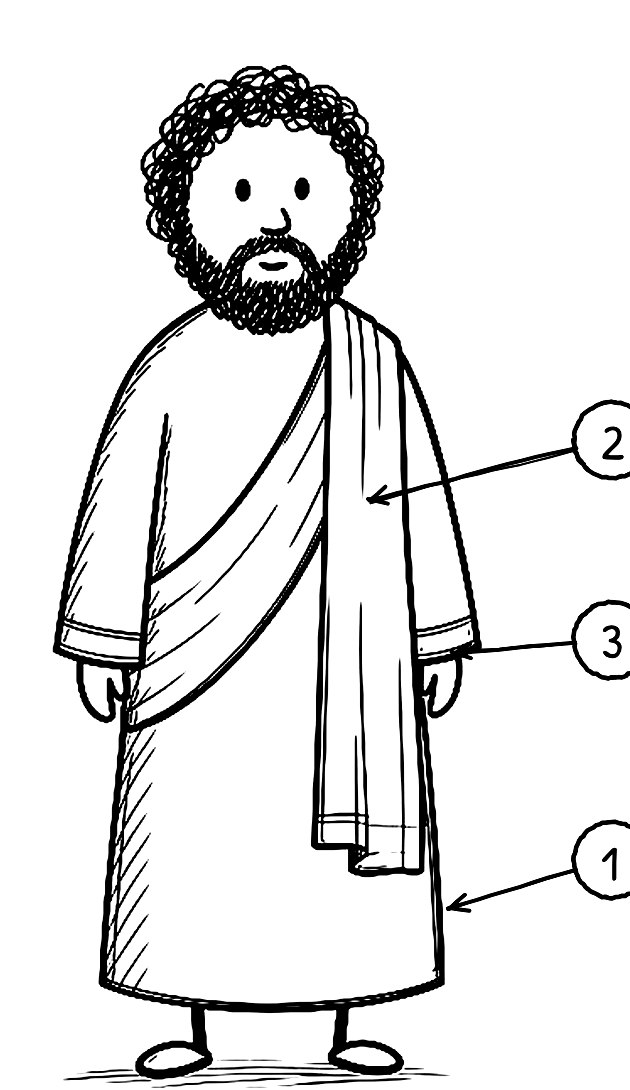 | Vestments at a Glance | ὀράριον, orárion · орарь, orar' |
| Ordination | The laying on of hands that makes a deacon, priest or bishop. Readers and subdeacons are set apart outside the sanctuary, before the Liturgy. | Ordination and the Clergy Family | χειροτονία, cheirotonía · хиротония, khirotoniya | ||
| Oriental Orthodox | The Coptic, Armenian, Ethiopian, Eritrean, Syriac and Indian Malankara churches, which parted from the rest after the Council of Chalcedon (451). Close cousins with similar services; not in communion with the Orthodox. | Who Are the Orthodox? | |||
| Orlets | orlets | or-LETS | The small round rug with an eagle over a city, set under a bishop's feet wherever he stands to serve. | Vestments at a Glance | орлец, orlets |
| Orthodox (the word) | orthódoxos | From the Greek for "having the right opinion"; doxa means both opinion and praise, so the one word carries right belief and right worship together. | Who Are the Orthodox? | ὀρθόδοξος, orthódoxos · православный, pravoslavnyy · أرثوذكسي, urthūdhuksī | |
| Orthros | Órthros | OR-thros | The Greek name for Matins, the morning service. See Matins. | Matins Is Already Happening | Ὄρθρος, Órthros |
P
| Term | Transliteration | Pronunciation | Short definition | Entry | Forms |
|---|---|---|---|---|---|
| Palm Sunday | Kyriaké ton Baḯon | The Sunday before Pascha: Christ's entry into Jerusalem. Palms, or pussy willow where palms don't grow, are blessed and held with lit candles. | Palm Sunday | Κυριακὴ τῶν Βαΐων, Kyriaké ton Baḯon · Вход Господень в Иерусалим, Vkhod Gospoden' v Ierusalim; Вербное воскресенье, Verbnoe voskresen'e (Russ.) · أحد الشعانين, aḥad al-shaʿānīn | |
| Panagia | Panagía | pah-nah-YEE-ah | "All-holy," the everyday Greek name for the Theotokos. Also the round medallion of her that a bishop wears on his chest. | Mary and the Saints | Παναγία, Panagía · Панагия, Panagiya (the medallion); Пресвятая, Presvyataya (the title) |
| Panikhida | panikhida | pah-nee-KHEE-dah | The short memorial service for the dead, sung after Liturgy or on Saturdays; it ends with "Memory eternal." Greeks say mnemosyno; Antiochian usage calls it the Trisagion for the departed. | Memorials, Blessings, and Announcements | μνημόσυνον, mnemósynon · панихида, panikhida |
| Paradosis | parádosis | pah-RAH-thoh-sis | "Handing on": Tradition, the Church's living memory of what came from the apostles. | Scripture and Tradition | παράδοσις, parádosis · Предание, Predanie |
| Paraklesis | Paráklesis | pah-RAH-klee-sis | A short service of supplication, usually to the Theotokos, sung in the first two weeks of August and whenever someone's in trouble. The Slavic moleben is a different service with the same purpose. | Other Services You'll Meet | Παράκλησις, Paráklesis · молебен, moleben (the nearest Slavic equivalent) |
| Pascha | Páscha | PAHS-khah | Easter, the Feast of Feasts. The word is Passover. Why the date moves: Why Is Orthodox Easter on a Different Date?. | Holy Week and Pascha | Πάσχα, Páscha · Пасха, Paskha · الفصح, al-Fiṣḥ |
| Paschal Hours | A short Paschal service that Slavic usage sings between Paschal Matins and the Liturgy. | Holy Week and Pascha | |||
| Paschal Matins | The Matins of the Resurrection, served at midnight before the Paschal Liturgy. | Holy Week and Pascha | |||
| Paschalion | paschálion | pahs-KHAH-lee-on | The table for calculating Pascha. Nearly all Orthodox use the old Julian one, whatever calendar they keep for Christmas. | Why Is Orthodox Easter on a Different Date? | πασχάλιον, paschálion · Пасхалия, Paskhaliya |
| Passions (pathe) | páthe | Greek PAH-thee | Desires gone wrong and grown into habits; the Greek means "sufferings." The sicknesses the Christian life sets out to heal. | The Christian Life: Commandments, Beatitudes, Passions, Virtues | πάθη, páthe · страсти, strasti |
| Patriarch | patriárches | The title of the chief bishop of certain churches: the ancient sees of Constantinople, Alexandria, Antioch and Jerusalem, and the later patriarchates of Moscow, Serbia, Romania, Bulgaria and Georgia. | How the Church Is Organized | πατριάρχης, patriárches · патриарх, patriarkh | |
| Patron saint | The saint you're named for, or whose name you take when you're received; your name day is that saint's feast. Every church has a patron too. | Family Life, Name Days, and Godparents | |||
| Pectoral cross | epistéthios staurós | The cross on a chain worn over the vestments. Russian priests have all worn one since Nicholas II, the last tsar, gave one to every priest in the empire; Greek priests wear one when a bishop awards it. | Vestments at a Glance | ἐπιστήθιος σταυρός, epistéthios staurós · наперсный крест, napersnyy krest | |
| Pentecost | The fiftieth day after Pascha, when the Holy Spirit came on the apostles: the Church's birthday. | Pentecost | Πεντηκοστή, Pentekosté · Пятидесятница, Pyatidesyatnitsa; Троица, Troitsa (Russ.) · العنصرة, al-ʿanṣara | ||
| Pews | Benches. Some Orthodox churches have them and some don't; where there are none, people stand, and the chairs along the walls are for anyone who needs one. | Standing, Sitting, Pews, and Kneeling | |||
| Phelonion | phailónion | feh-LOH-nee-on | The priest's outer vestment, a cape cut short in front so his hands are free. The same ancient cloak as the Latin chasuble, cut differently. | Vestments at a Glance | φαιλόνιον, phailónion · фелонь, felon' · الإفلونية, al-iflūniyya |
| Phiale | phiále | fee-AH-lee | The stone fountain basin in some Greek churchyards, where water is blessed at Theophany. A survivor of the old courtyard fountain. | The Courtyard and the Steps | φιάλη, phiále |
| Philoptochos | Philóptochos | fee-LOP-toh-khos | "Friend of the poor": the philanthropic society of Greek parishes. | Almsgiving and Stewardship | Φιλόπτωχος, Philóptochos |
| Phyletism | phyletismós | FY-luh-tiz-um | Making race or nationality a principle that divides the Church into separate ethnic bodies; condemned by a council at Constantinople in 1872. Not simply using a local language or keeping cultural customs. | Myth: "Orthodoxy is an ethnic church" | φυλετισμός, phyletismós |
| Prayer Behind the Ambo | opisthámbonos | The prayer the priest says out among the people near the end of the Liturgy, standing below the ambo. | The Prayer Behind the Ambo and the Dismissal | ὀπισθάμβωνος (εὐχή), opisthámbonos · заамвонная молитва, zaamvonnaya molitva | |
| Prayer of Inclination | The prayer after the Lord's Prayer, said while everyone bows the head. | The Lord's Prayer | εὐχὴ τῆς κεφαλοκλισίας, euché tes kephaloklisías | ||
| Prayer of Offering | The priest's quiet prayer under the Litany of Supplication, asking God to accept the prayer of sinners and bear it to his altar. | The Litany of Supplication | |||
| Prayer of Saint Ephraim | Euché tou Hagíou Ephraím | The short Lenten prayer "O Lord and Master of my life," said with prostrations at weekday services in Lent and traditionally credited to Saint Ephraim the Syrian. | The Prayer of Saint Ephraim | Εὐχὴ τοῦ Ἁγίου Ἐφραίμ, Euché tou Hagíou Ephraím · Молитва святого Ефрема Сирина, Molitva svyatogo Efrema Sirina | |
| Prayer rule | The set of prayers a person keeps each day: a rule in the old monastic sense, a measure you've agreed to keep. | Prayer at Home | молитвенное правило, molitvennoe pravilo (Russ.) | ||
| Presanctified Liturgy | The Lenten weekday evening service that gives Communion from gifts consecrated at an earlier Liturgy. | Other Services You'll Meet | Λειτουργία τῶν Προηγιασμένων, Leitourgía ton Proegiasménon · Литургия Преждеосвященных Даров, Liturgiya Prezhdeosvyashchennykh Darov | ||
| Presbyter | presbýteros | PREZ-bih-ter | "Elder," the New Testament's word for the man we call a priest (1 Timothy 5:17; Titus 1:5). "Priest" is what the word turned into on its way through Latin and Old English. | Ordination and the Clergy Family | πρεσβύτερος, presbýteros · пресвитер, presviter · القسّ, al-qass |
| Presbytera / Matushka / Khouria | presbytéra | Greek prez-vee-TEH-rah; Slavic MAH-toosh-kah; Arabic khoo-REE-yah | The priest's wife, with a title of her own: Presbytera (Greek), Matushka (Slavic), Khouria (Arabic), Preoteasa (Romanian), Popadija (Serbian). | Ordination and the Clergy Family | πρεσβυτέρα, presbytéra · матушка, matushka (Russ.) · خورية, khūriyya |
| Priest | hiereús | The pastor of a parish, who celebrates the Liturgy and the sacraments; usually married. A man may marry before ordination, not after. | Ordination and the Clergy Family | ἱερεύς, hiereús · иерей, ierey; священник, svyashchennik · كاهن, kāhin; خوري, khūrī (parish usage) | |
| Prokeimenon | prokeímenon | proh-KEE-meh-non | Psalm verses chanted before the Epistle (and at Vespers). | The Prokeimenon and the Epistle | προκείμενον, prokeímenon · прокимен, prokimen |
| Proskomedia | proskomidé | pros-koh-MEE-dee-ah; Greek pros-koh-mee-THEE | The quiet preparation before the Liturgy: the priest cuts the Lamb from the prosphora and sets out particles for the Theotokos, the saints, the living and the dead.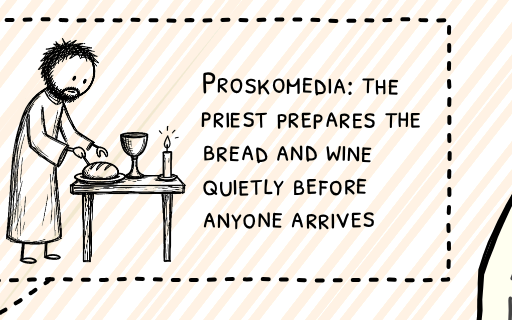 | The Cross and the Bread | προσκομιδή, proskomidé · проскомидия, proskomidiya |
| Proskynesis | proskýnesis | pros-KEE-nee-sis | Veneration: honor shown by bowing and kissing, given to icons, saints and relics. | Icons: Windows, Not Idols | προσκύνησις, proskýnesis |
| Prosphora | prósphoron | PROS-foh-rah; Greek PROS-foh-roh; Slavic prohs-foh-RAH | The leavened loaf, stamped with a seal, from which the Lamb is cut for Communion. Baked by parishioners. | The Cross and the Bread | πρόσφορον, prósphoron · просфора, prosfora |
| Prostration | metánoia | Kneeling with forehead to the floor: a bodily "I'm sorry" or "I'm yours." Not on Sundays, by ancient rule. Parishes keep it unevenly. | Standing, Sitting, Pews, and Kneeling | μετάνοια, metánoia · земной поклон, zemnoy poklon | |
| Prothesis | próthesis | PROH-theh-sis | The table to the left of the Holy Table where the gifts are prepared, and in Greek usage the preparation rite itself. | The Cross and the Bread | πρόθεσις, próthesis · жертвенник, zhertvennik (the table) |
| Protopresbyter (archpriest) | protopresbýteros | An honorary title for a senior married priest. In Slavic churches the usual title is archpriest; in the Greek world the titles and their crosses vary by church. | Vestments at a Glance | πρωτοπρεσβύτερος, protopresbýteros · протоиерей, protoierey; протопресвитер, protopresviter | |
| Protopsaltis | protopsáltes | proh-toh-PSAHL-tees | In Byzantine chant, the lead chanter of the right-hand choir; the leader on the left is the lampadarios. | Why Orthodox Music Sounds Like That | πρωτοψάλτης, protopsáltes; λαμπαδάριος, lampadários |
| Purgatory | The Roman Catholic teaching of a "final purification of the elect" after death. The Orthodox pray for the dead every Sunday but haven't defined a place or process of purification. | Orthodox and Catholic |
R
| Term | Transliteration | Pronunciation | Short definition | Entry | Forms |
|---|---|---|---|---|---|
| Reader | anagnóstes | A tonsured layman who chants the Epistle and other readings. | Who's Who | ἀναγνώστης, anagnóstes · чтец, chtets | |
| Relic | leípsanon | A saint's body, part of one, or something that touched one, kept in a church and honored. Relics are placed in the altar when a bishop consecrates a church, and in Russian practice they're placed in the antimension too (Service Book, p. xxviii). | Relics: Why the Orthodox Venerate Bones | λείψανον, leípsanon · мощи, moshchi · ذخيرة, dhakhīra | |
| Resurrection of the body | The Creed's hope: the dead will be raised, bodies and all. | What Happens After Death? | ἀνάστασις νεκρῶν, anástasis nekrón · воскресение мертвых, voskresenie mertvykh | ||
| Revised Julian calendar | The "New Calendar" for fixed feasts, proposed in 1923; it matches the Gregorian calendar for fixed dates until 2800. | Why Is Orthodox Easter on a Different Date? | |||
| Ripidia (exapteryga, fans) | rhipídia | ree-PEE-thee-ah | Metal discs on poles painted with six-winged seraphim, carried in processions and held over the gifts. They began as real fans, to keep insects off the chalice. | The Great Entrance | ῥιπίδια, rhipídia; ἑξαπτέρυγα, hexaptéryga · рипиды, ripidy |
| ROCOR (Russian Orthodox Church Outside of Russia) | ROH-kor | The Russian Orthodox Church Outside of Russia, a self-governing part of the Moscow Patriarchate since the two signed an Act of Canonical Communion on May 17, 2007, ending an eighty-year division. One of the "two different routes" by which Russian parishes here are in communion with Moscow. | Who Are the Orthodox? | Русская Православная Церковь Заграницей, Russkaya Pravoslavnaya Tserkov' Zagranitsey | |
| Royal Doors (Beautiful Gate) | Horaía Pýle | The two traditions name the doors differently. Slavic usage: the Royal Doors (also the Holy Doors) are the central doors of the iconostasis, opening into the sanctuary. Greek usage: that door is the Beautiful Gate (Oraia Pyli), and the "Royal Door" is the curtain or door leading from the narthex into the nave, named for the imperial entrance at Hagia Sophia, where only royalty entered to offer the gifts. This guide uses "Royal Doors" in the Slavic sense. | The Iconostasis and Its Doors | Ὡραία Πύλη, Horaía Pýle (Greek: the sanctuary door) · Βασιλικὴ Πύλη, Basiliké Pýle (Greek: the narthex door) · Царские врата, Tsarskie vrata (Slavonic: the sanctuary doors) | |
| Royal Hours | Megálai Hórai | The First, Third, Sixth and Ninth Hours expanded with Old Testament, Epistle and Gospel readings, read on Holy Friday morning and on the eves of Christmas and Theophany. | Holy Week and Pascha | Μεγάλαι Ὧραι, Megálai Hórai · Царские часы, Tsarskie chasy | |
| Rudder (Pedalion) | Pedálion | peh-DAH-lee-on | The standard Greek collection of the canons with commentary, compiled on Mount Athos and printed in 1800. This guide cites the Cummings translation. | How the Church Is Organized | Πηδάλιον, Pedálion |
S
| Term | Transliteration | Pronunciation | Short definition | Entry | Forms |
|---|---|---|---|---|---|
| Sakkos | sákkos | SAH-kos | The bishop's wide-sleeved tunic, worn in place of the priest's phelonion. | Vestments at a Glance | σάκκος, sákkos · саккос, sakkos |
| Sanctuary (bema) | Hierón Béma | The space behind the iconostasis, with the Holy Table (the altar) at its center: the third of the temple's three spaces, after the narthex and the nave. Also called the bema. It is for clergy and those blessed to serve. | The Room | Ἱερὸν Βῆμα, Hierón Béma · алтарь, altar' · الهيكل, al-haykal | |
| Sanctus | SANGK-tus | "Holy, holy, holy," the angels' hymn sung inside the Anaphora. The name is Latin. | “Lift Up Your Hearts” | ||
| Seal (prosphora seal) | sphragís | The stamp pressed into the loaf before baking: a cross with IC XC NI KA ("Jesus Christ conquers") in the quarters. The priest cuts the Lamb out along its lines. | The Cross and the Bread | σφραγίς, sphragís · печать, pechat' | |
| Second Coming | Christ's return in glory to judge the living and the dead. | What Happens After Death? | Δευτέρα Παρουσία, Deutéra Parousía · Второе пришествие, Vtoroe prishestvie | ||
| Semantron | sémantron | SEE-mahn-dron | A long wooden plank, sometimes iron, struck with a mallet in a rhythm to call people to prayer. Older than church bells in the East, and still heard in monasteries. | The Courtyard and the Steps | σήμαντρον, sémantron · било, bilo |
| Septuagint | hoi Hebdomékonta | sep-TOO-uh-jint | The Greek translation of the Old Testament made by Jews before Christ, the one the apostles quote most, and still the Orthodox Church's Old Testament. Its psalm numbers run one behind the Hebrew for most of the Psalter. | Scripture and Tradition | οἱ Ἑβδομήκοντα, hoi Hebdomékonta ("the Seventy") |
| Sign of the Cross | semeíon tou stauroú | Thumb and two fingers together, two fingers folded to the palm; forehead, chest, right shoulder, left shoulder. Around 1200 Pope Innocent III still described the Latin sign as right to left; when and why the West changed is disputed. | Prayer at Home | σημεῖον τοῦ σταυροῦ, semeíon tou stauroú · крестное знамение, krestnoe znamenie · رسم إشارة الصليب, rasm ishārat al-ṣalīb | |
| Six Psalms | Hexápsalmos | Six psalms read near the start of Matins; at a full Greek or Antiochian Vigil, Orthros begins with them. | Vespers, Vigil, and the Daily Round | ἑξάψαλμος, hexápsalmos · шестопсалмие, shestopsalmie | |
| Skeuophylakion | skeuophylákion | skev-oh-fee-LAH-kee-on | The sacristy building of the great Byzantine churches, a separate structure from which the gifts were once fetched at the Great Entrance. | The Great Entrance | σκευοφυλάκιον, skeuophylákion |
| Slava | SLAH-vah | The Serbian family feast, the day of the family's patron saint. | Family Life, Name Days, and Godparents | слава, slava (Serbian usage) | |
| Small Entrance | Mikrá Eísodos | The procession with the Gospel book, earlier than the Great Entrance. It's the surviving original beginning of the Liturgy; the antiphons were added in front of it later. | The Small Entrance | Μικρὰ Εἴσοδος, Mikrá Eísodos · Малый вход, Malyy vkhod · الدخول الصغير, al-dukhūl al-ṣaghīr | |
| Solea | soléas | The raised strip in front of the iconostasis. Weddings, baptisms and Communion happen here. | The Room | σολέας, soléas · солея, soleya | |
| Spiritual father | pneumatikós | The priest you regularly confess to and ask for counsel. Usually your parish priest, though not always. | Confession | πνευματικός, pneumatikós · духовник, dukhovnik | |
| Stasidia | stasídia | stah-SEE-thee-ah | Tall wooden stalls along the walls with a fold-up seat and high armrests. You stand in them, lean, or perch on the ledge. | Standing, Sitting, Pews, and Kneeling | στασίδια, stasídia (sing. στασίδι, stasídi) |
| Stewardship | The American parish word for supporting the parish itself with time, talent and money, often pledged once a year. | Almsgiving and Stewardship | |||
| Sticharion | stichárion | stee-KHAH-ree-on | The long robe worn by every rank: the acolyte's and the deacon's outer robe, and the priest's and bishop's undermost vestment. | Vestments at a Glance | στιχάριον, stichárion · стихарь, stikhar' |
| Subdeacon | hypodiákonos | A minor order between reader and deacon, in tunic and orarion crossed over both shoulders. Mostly seen when a bishop visits, handing him things. | Ordination and the Clergy Family | ὑποδιάκονος, hypodiákonos · иподиакон, ipodiakon | |
| Sunday of Orthodoxy | Kyriaké tes Orthodoxías | The first Sunday of Lent, keeping the final restoration of the icons in 843; in many places the people carry their icons in procession. | Icons: Windows, Not Idols | Κυριακὴ τῆς Ὀρθοδοξίας, Kyriaké tes Orthodoxías · Неделя Торжества Православия, Nedelya Torzhestva Pravoslaviya · أحد الأرثوذكسية, aḥad al-urthūdhuksiyya | |
| Synergy | synérgeia | SIN-er-jee | "Working together": the cooperation of God's grace and human freedom. | Salvation as Healing: Grace, Repentance, Theosis | συνέργεια, synérgeia · синергия, sinergiya |
| Synod | A council of bishops. | How the Church Is Organized | σύνοδος, sýnodos · синод, sinod; собор, sobor |
T
| Term | Transliteration | Pronunciation | Short definition | Entry | Forms |
|---|---|---|---|---|---|
| Templon | témplon | TEM-bloh | The Byzantine chancel barrier, a low parapet with columns and a beam, the ancestor of the iconostasis. Greeks still call the icon screen by this name. | The Iconostasis and Its Doors | τέμπλον, témplon; modern τέμπλο, témplo |
| Ten Commandments | The "ten words" given at Sinai (Exodus 20:1–17). The Orthodox count them the older Greek way, with the ban on images as its own commandment. | The Christian Life: Commandments, Beatitudes, Passions, Virtues | Δεκάλογος, Dekálogos · Десять заповедей, Desyat' zapovedey | ||
| Theophany | Theopháneia | thee-OFF-uh-nee | January 6 (January 19 on the civil calendar for Julian-calendar parishes): Christ's baptism in the Jordan, when the Trinity is shown. The Church blesses water that day, in some places by throwing a cross into the harbor for the young men to dive after. | Theophany | Θεοφάνεια, Theopháneia; Τὰ Φῶτα, Ta Phóta · Богоявление, Bogoyavlenie; Крещение Господне, Kreshchenie Gospodne · الظهور الإلهي, al-ẓuhūr al-ilāhī |
| Theosis | théosis | thee-OH-sis | Union with God by grace: real sharing in his uncreated energies, his living activity and self-giving, not becoming God's essence or another divine person. We remain human persons. | Salvation as Healing: Grace, Repentance, Theosis | θέωσις, théosis · обожение, obozhenie |
| Theotokos | Theotókos | thee-oh-TOH-kos | "God-bearer": Mary. The title the Church defended at Ephesus in 431. | Mary and the Saints | Θεοτόκος, Theotókos · Богородица, Bogoroditsa · والدة الإله, Wālidat al-Ilāh |
| Toll houses | telónia | A picture of the soul after death passing stations in the air where demons accuse it and angels defend it. Some Orthodox teachers hold it, others reject it, and no council has ruled. | What Happens After Death? | τελώνια, telónia · мытарства, mytarstva | |
| Tones (the eight tones) | The eight melodic modes of Orthodox chant, one a week in turn. Greek chant and Slavic choral harmony run on the same eight. | Why Orthodox Music Sounds Like That | ἦχοι, échoi · гласы, glasy | ||
| Tonsure | kourá | A few snips of hair cut in the shape of a cross: at baptism as a first offering, when a reader is set apart, and when a monk or nun takes vows. | Baptism and Chrismation | κουρά, kourá · постриг, postrig | |
| Transfiguration | Metamórphosis | August 6 (August 19 civil, Julian calendar): Christ shining on Mount Tabor before Peter, James and John. Grapes and fruit are blessed that day. | The Transfiguration | Μεταμόρφωσις, Metamórphosis · Преображение Господне, Preobrazhenie Gospodne · التجلي, al-tajallī | |
| Trapeza | trápeza | TRAH-peh-zah; Slavic trah-PEH-zah | "Table": a monastery's refectory and the meal eaten there. Some Russian parishes call coffee hour the trapeza. Not the Holy Table. | Coffee Hour | τράπεζα, trápeza · трапеза, trapeza |
| Triodion | Triódion | tree-OH-thee-on | The service book, and the season, of the ten weeks before Pascha: three weeks of warm-up, then Great Lent and Holy Week. Named for its three-ode canons. | Fasting: The Rules, the Range, and the Point | Τριῴδιον, Triódion · Триодь постная, Triod' postnaya |
| Trisagion | Triságion | tree-SAH-yee-on | "Holy God, Holy Mighty, Holy Immortal, have mercy on us," sung three times, then once more. Antiochian usage also names the memorial service after it. | The Trisagion | Τρισάγιον, Triságion · Трисвятое, Trisvyatoe · قدوس الله, quddūsun Allāh |
| Troparion (troparia) | tropárion | troh-PAH-ree-on | A short hymn that sums up the feast or the saint of the day, sung after the Small Entrance and at the end of Vespers. Greeks call the main one the apolytikion. | The Small Entrance | τροπάριον, tropárion · тропарь, tropar' |
| Trullo (Council in Trullo) | Troúllos | TROO-loh | The council of 692 in the domed hall (troullos) of the imperial palace in Constantinople, also called the Quinisext, which gathered the canons into one body. The guide cites it often. | How the Church Is Organized | Σύνοδος ἐν Τρούλλῳ, Sýnodos en Troúllo · Трулльский собор, Trull'skiy sobor |
| Typika | typiká | tee-pee-KAH | Psalms 103 and 146 (102 and 145 in the Septuagint) and the Beatitudes, sung as the Sunday antiphons. Not unique to Slavic use: the Greek typikon still prescribes them as the Sunday norm, though in the Greek world they are heard more in monasteries than in parishes. Also a short reader's service that stands in when there's no Liturgy. | The Antiphons and the Beatitudes | τυπικά, typiká · изобразительны, izobrazitel'ny |
| Typikon | typikón | tee-pee-KON; Slavic TEE-pee-kon | The rulebook that says which service, which hymns and which fast on which day. There's more than one, and every parish adapts. | Fasting: The Rules, the Range, and the Point | τυπικόν, typikón · устав, ustav; Типикон, Tipikon |
V
| Term | Transliteration | Pronunciation | Short definition | Entry | Forms |
|---|---|---|---|---|---|
| Vespers | Hesperinós | VES-perz | The evening service, and the first service of any liturgical day, because the day begins at evening ("the evening and the morning were the first day"); hence it opens with the creation psalm, Psalm 104 (103 in the Septuagint). Lamps lit, the evening psalms, incense, and "O Gladsome Light." At the Sunday Vigil, Saturday evening's Vespers already commemorates the Resurrection. | Vespers, Vigil, and the Daily Round | Ἑσπερινός, Hesperinós · вечерня, vechernya · صلاة الغروب, ṣalāt al-ghurūb |
| Virtues | The healthy habits that grow in place of the passions. | The Christian Life: Commandments, Beatitudes, Passions, Virtues | ἀρεταί, aretaí · добродетели, dobrodeteli |
W
| Term | Transliteration | Pronunciation | Short definition | Entry | Forms |
|---|---|---|---|---|---|
| We have beheld the true Light | The hymn sung after Communion, borrowed from Pentecost Vespers. | The Prayer Behind the Ambo and the Dismissal | Εἴδομεν τὸ φῶς τὸ ἀληθινόν, Eídomen to phós to alethinón · Видехом свет истинный, Videkhom svet istinnyy | ||
| Western Rite | Western liturgies used by a small number of canonical Orthodox parishes, mostly in the Antiochian Archdiocese and ROCOR (the Russian Orthodox Church Outside of Russia). These parishes are Orthodox, but their services look different from the Byzantine rite described in this guide. | How to Find a Parish, and Next Steps | |||
| Wisdom! Let us attend! | Sophía, orthoí; próschomen | Greek soh-FEE-ah, or-THEE; PROS-khoh-men | The deacon's short calls before the readings, the Gospel and the Creed. "Wisdom!" says what's coming matters; "Let us attend!" says listen; "Stand upright!" (Greek orthoi) says get up for the Gospel. | The Small Entrance | Σοφία· ὀρθοί, Sophía, orthoí; Πρόσχωμεν, Próschomen · Премудрость, прости, Premudrost', prosti; Вонмем, Vonmem |
| Words of institution | Christ's words at the Last Supper, "Take, eat," repeated in the Anaphora over the bread and the cup. | The Words of Institution and the Epiclesis |
X
| Term | Transliteration | Pronunciation | Short definition | Entry | Forms |
|---|---|---|---|---|---|
| Xerophagy | xerophagía | zih-ROF-uh-jee | "Dry eating": the plainest diet the fasting books allow, kept on the strictest days. | Fasting: The Rules, the Range, and the Point | ξηροφαγία, xerophagía · сухоядение, sukhoyadenie |
Z
| Term | Transliteration | Pronunciation | Short definition | Entry | Forms |
|---|---|---|---|---|---|
| Zapivka | zah-PEEV-kah | The sip of wine and warm water offered right after Communion in Slavic parishes, to wash the Gifts down. Not Communion; refreshment. | Communion | запивка, zapivka (Russ.) | |
| Zeon | zéon | ZEH-on | Hot water poured into the chalice just before Communion, "the warmth of faith, full of the Holy Spirit" (Service Book, p. 115). | "Holy Things Are for the Holy" | ζέον, zéon · теплота, teplota |
| Znamenny (znamenny chant) | ZNAH-men-nee | The oldest family of Russian chant. | Why Orthodox Music Sounds Like That | знаменный распев, znamennyy raspev | |
| Zone | zóne | ZOH-nee | The belt worn by priest and bishop over the epitrachelion. | Vestments at a Glance | ζώνη, zóne · пояс, poyas |