
PART THREE · 14 ENTRIES
What the Orthodox Believe
- 1What the Orthodox Believe: The Creed in Plain WordsThe Nicene Creed of 325 and 381 is the core confession of Orthodox faith in a couple hundred words, and this page walks through it one article at a time, without the Western "and the Son."
- 2The Holy Trinity: One God in Three PersonsThe Orthodox confess one God in three Persons, the Father, the Son and the Holy Spirit, equal and eternal and told apart only by how they relate to one another, and they pray to the Trinity far more often than they try to explain it.
- 3Nicea, AD 325: What Happened and What Didn'tThe First Council of Nicea in 325 answered Arius with one Greek word and left the Church the Creed, twenty canons and a crop of later legends, and this entry sorts what the sources say from what later tellers added.
- 4Who Christ Is: God Made ManThe Orthodox confess that Jesus Christ is one Person, fully God and fully man, who took on everything human except sin so that all of it could be healed, and who is at once Priest, Prophet and King.
- 5Angels, the Devil, and Where Evil Came FromThe Orthodox believe God made an invisible creation of angels as well as the visible world, that evil began when some angels freely turned away from him, and that the devil is real, dangerous and already defeated.
- 6Scripture and TraditionThe Orthodox hold the Bible as the Church's own book, read aloud in its worship and understood inside its living memory, with an Old Testament taken from the Greek Septuagint.
- 7Salvation as Healing: Grace, Repentance, TheosisThe Orthodox speak of salvation mainly as healing and union with God, received by grace and lived out through repentance, the sacraments and a lifelong cooperation with God's grace, called synergy, through which we grow toward theosis: sharing in God's life by grace.
- 8What Is a Mystery?The Orthodox call the sacraments mysteries: rites in which God truly gives his grace through visible things, each one meeting a different need, and received fruitfully by those who come prepared.
- 9Prayer and the Lord's PrayerOrthodox Christians understand prayer as personal conversation with God, both the Church's common prayer and their own, made of praise, thanksgiving and asking, and they treat the Lord's Prayer as its pattern and summary.
- 10Mary and the SaintsThe Orthodox honor Mary as the Theotokos and ask her and the saints to pray for them, but they worship God alone.
- 11Icons: Windows, Not IdolsIcons are images of Christ, his mother and the saints that the Orthodox honor but never worship, because the Second Commandment forbids idols, not images, and because in Christ the invisible God became visible.
- 12Why Do the Orthodox Kiss Everything?The Orthodox kiss icons, the cross, the Gospel book, the priest's hand and each other because a kiss is the body's way of giving honor, and honor given to holy things passes to Christ and his saints.
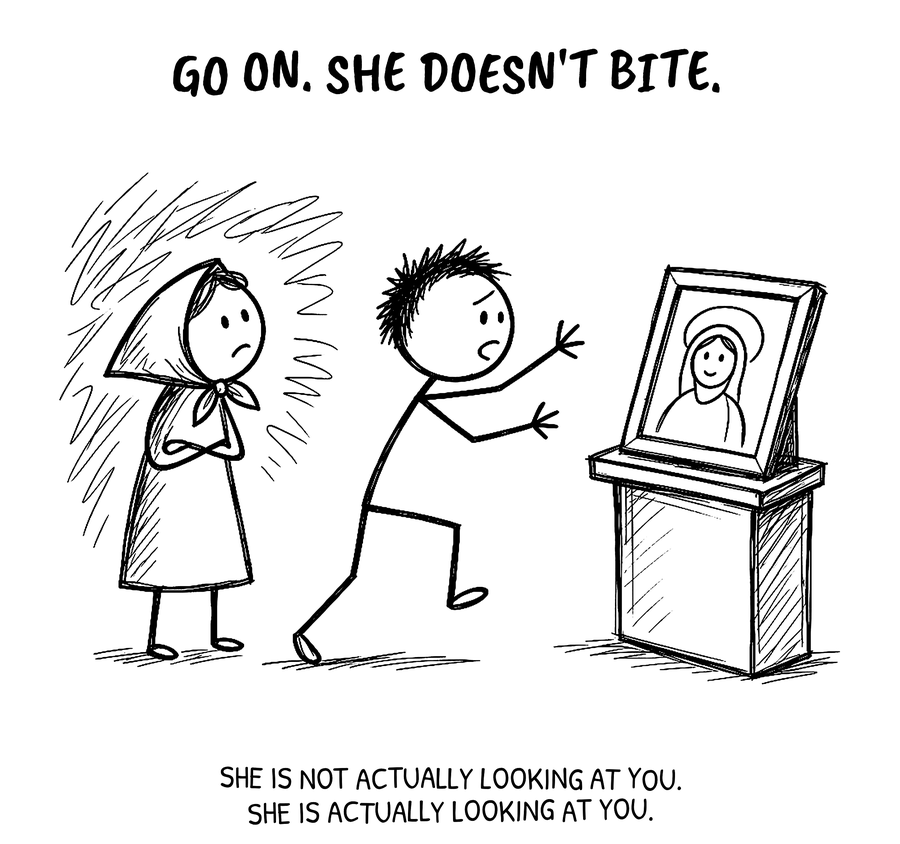
- 13Relics: Why the Orthodox Venerate BonesThe Orthodox honor the bodies and belongings of saints because the body is a temple of the Holy Spirit that will rise again, and they build their altars over the relics of martyrs.
- 14What Happens After Death?The Orthodox Church teaches with confidence that Christ has defeated death, that he will come again to judge the living and the dead, that the dead will rise, and that we should pray for the departed, and it stays deliberately quiet about the details in between.
