
What you'll notice
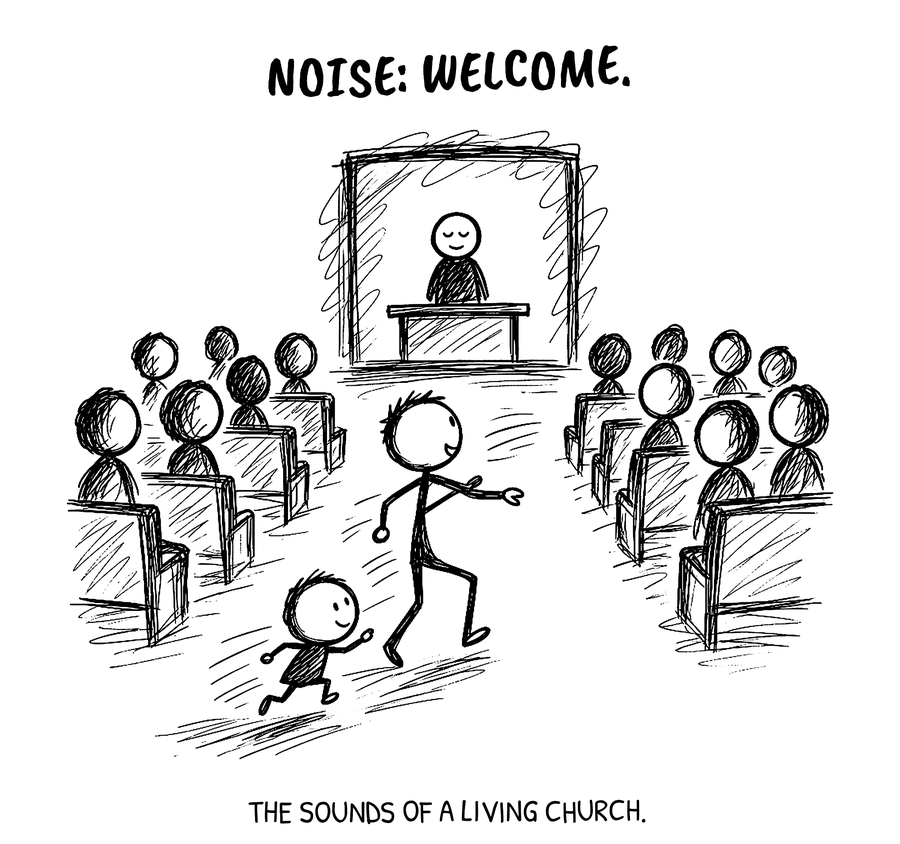
An Orthodox Liturgy on a Sunday morning has babies in it. They're carried up for Communion, they fall asleep in the pews, they wander up front during the sermon and get carried back by a stranger. In churches without pews, children sit on the carpet near the front in a loose circle, looking at the icons or at each other, while the adults step around them. You won't be the first family with a four-year-old asking loudly why the man is wearing a dress.
What it's called
There's no children's church and no special name for any of this. The words worth knowing are places and things: the narthex (the entry room), where you take a loud baby; the solea (the raised step in front of the icon screen), where children shouldn't play; and the antidoron (the blessed bread), which they can have at the end. You won't hear about a "first Communion" either. An Orthodox child's first Communion comes right after baptism, usually in infancy.
What's actually happening
When a child melts down, a parent walks to the narthex and comes back when the storm passes. Nobody looks; everyone's done it. Some parishes have a cry room or a nursery, most don't, and none expect you to use one. If you're nursing, nurse.
You'll see infants carried to the chalice and given Communion from the spoon. A baptized baby is a member of the Church, and members eat at the table. Jesus said, "Let the little children come to Me, and do not forbid them; for of such is the kingdom of God" (Mark 10:14), and the Church took him at his word. Nobody is asked to understand Communion before receiving it, since nobody fully understands it afterward either.
Why it matters
A church that wants children to grow up inside its worship has to let them be in the room. Children learn the Liturgy the way they learn a language: by hearing it before they can say it, and by being carried through it before they can walk it.
Where it came from
Infant Communion isn't new. In third-century Carthage, Saint Cyprian tells of an infant girl brought to the cup,1 and Saint Augustine argued from John 6:53 that infants need "the Lord's body and blood."2 Both are Latin North African witnesses. In the East, the fourth-century Syrian Apostolic Constitutions puts "the children" in the order of Communion, though it doesn't say infants.3 The Communion entry has more.
What you do
If you're Orthodox: you know all this, and your kids have been receiving since baptism. Bring them up front where they can see; the back of the church is the worst view in the building.
If you're visiting: stand near a side aisle so you have an exit. Communion is for Orthodox Christians, so a visiting family stays in place while the line goes up; in many parishes a visiting child may come forward with arms uncrossed and the priest will simply bless him. At the end, everyone can go up for the antidoron where it's offered, and children like this part; The Cross and the Bread explains it.
Snacks are fine for small children, just not during the quiet stretch before Communion; Orthodox adults who will receive are fasting, so don't offer the grown-ups. Nobody expects a child to stand for ninety minutes; let them sit on the floor, lean on you, or sit in the pew while you stand. Icons on stands will be touched, and a child who kisses one has done exactly the right thing. Keep children off the solea and out of the altar area; the doors in the icon screen are the one hard boundary.
Then stay for coffee hour. The kids will find the other kids inside four minutes, and you'll find out how the parish really is.
Field Note: the floor. The loose circle of children on the carpet up front looks like chaos and isn't. It's the Church's oldest childcare arrangement, and it works because the children can see.
Go deeper
- Mark 10:13–16.
- The Narthex, where to take a loud baby.
- Communion, on why babies receive.
- Coffee Hour.