
What you'll notice
Another short litany, "Grant it, O Lord," with the same petitions you heard before the Kiss of Peace.1 Then the priest says something that sounds like a dare: "And vouchsafe, O Lord, that boldly and without condemnation we may call upon thee, God the heavenly Father, and say:"2 In Russian practice, this is where the deacon binds his stole around himself in the form of a cross.3
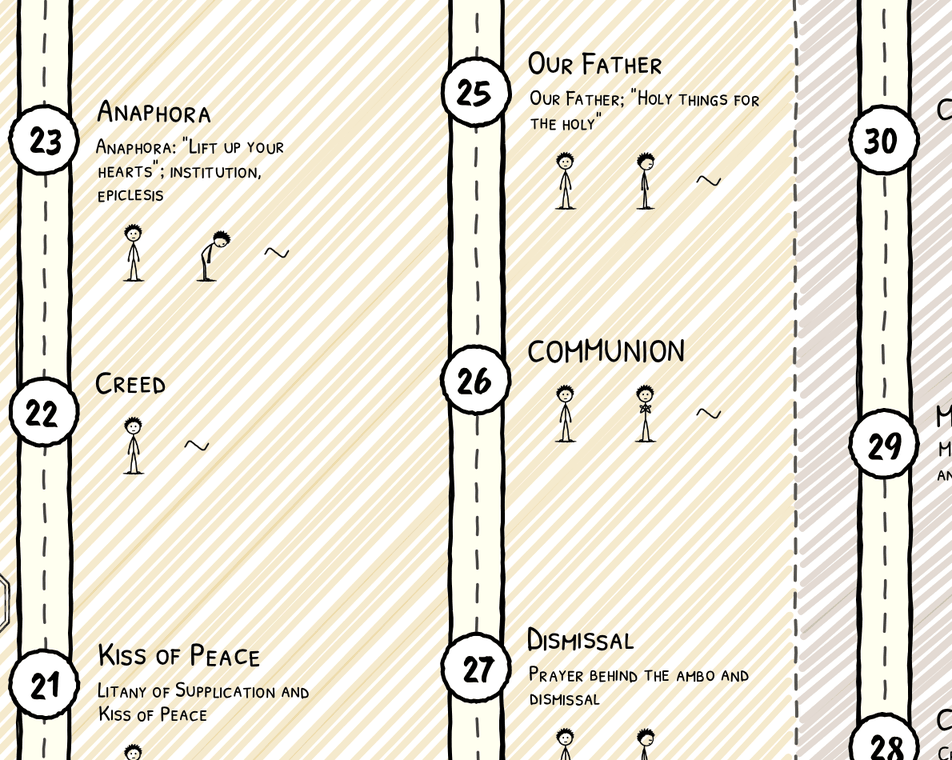
And the whole room says the Our Father. In a Greek parish it may be said in Greek and then in English; in a Slavic parish it's sung, by everyone, to a tune every child knows. The priest finishes it: "For thine is the kingdom, and the power, and the glory, of the Father, and of the Son, and of the Holy Spirit, now, and ever, and unto ages of ages." Then "Peace be with you all," and "Let us bow our heads unto the Lord,"4 and everyone does.
What it's called
The Lord's Prayer, which Orthodox usually call the Our Father (Greek Pater imon, Slavonic Otche nash). The line the priest adds at the end, "For thine is the kingdom," is an exclamation, the name for the spoken ending that closes a quiet prayer or a litany. The quiet prayer the priest says over the bowed heads is the Prayer of Inclination.
What's actually happening
First, the dare. The priest doesn't assume we can call God "Father"; he asks for the nerve to. The prayer that follows is the most familiar words in the building and also the most dangerous, since it asks to be forgiven exactly as much as we forgive.
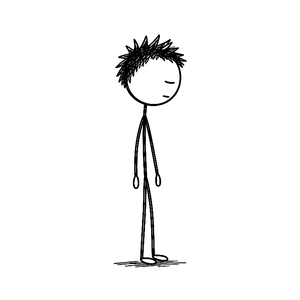
Then the bow. Everyone, priest included, stoops before the thing they're about to receive. The quiet prayer the priest says over the bowed heads explains it: "for they have not bowed down unto flesh and blood, but unto thee, the terrible God."5
Why it matters
Tertullian, around the year 200, called the Our Father "an epitome of the whole Gospel."6 In fourth-century Jerusalem it was kept from those preparing for baptism and explained to them in the week after Pascha, once they were baptized,7 and catechumens were sent out before this part of the Liturgy.8 So the first time they prayed it there, they prayed it as Christians. Calling God "Father" is something the Church treats as a gift, not a given. That's why the priest asks permission first.
Where it came from
The prayer itself is Christ's, taught to the disciples (Matthew 6:9 to 13). The Our Father has been in the Liturgy since at least the fourth century; Cyril of Jerusalem explains it line by line right where it sits now, before Communion,9 and Getcha notes that Cyril is the first writer to put it there.10
What you do
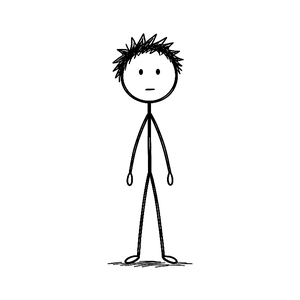
If you're Orthodox: say the Our Father out loud, with everyone; it belongs to the whole assembly, not the choir.11 Bow your head and keep it bowed until the priest finishes the prayer.
If you're visiting: say the Our Father; it belongs to you as much as anyone. Bow when they bow. When the priest calls out "Holy things unto the Holy," that's the next stop.
Field Note: the ending. If you're Protestant, you've always said "for Thine is the kingdom" yourself. If you're Catholic, you say it after an interruption. In the Orthodox Church the priest says it, as the exclamation that ends the prayer, and the people say "Amen." Same words, three customs, one prayer. Nobody is wrong.
Notes
-
Hapgood, Service Book, pp. 111 to 112. ↩
-
Hapgood, Service Book, p. 112. ↩
-
Hapgood, Service Book, p. 112 (rubric), and note 19, pp. 599 to 600. ↩
-
Hapgood, Service Book, pp. 112 to 113. ↩
-
Hapgood, Service Book, p. 113. ↩
-
Tertullian, On Prayer 1 (ANF 3). ↩
-
Cyril of Jerusalem, Mystagogical Catecheses 5.11 to 18 (NPNF2 7); Lectures on the Christian Sacraments (SVS Popular Patristics 57), introduction, pp. 17 and 27. ↩
-
Council of Laodicea, canon 19 (NPNF2 14). ↩
-
Cyril of Jerusalem, Mystagogical Catecheses 5.11 to 18 (NPNF2 7). ↩
-
Getcha, The Euchologion Unveiled, p. 51. ↩
-
Getcha, The Euchologion Unveiled, p. 76. ↩